Proudly serving Phoenix, Mesa, Glendale, Scottsdale, Tempe, Chandler & surrounding areasCall or Text 24/7: 602-449-8153
Aerial view of Phoenix, AZ, showing desert foothills, saguaro cacti, and residential neighborhoods at sunset.

Affordable Non-Emergency Medical Transportation Options in Phoenix, AZ

A cheap medical ride in Phoenix still needs the right vehicle, securement, and support, which is the standard Phoenix Non Emergency Medical Transport uses when scoping non-emergency medical transportation. Affordable options include ambulatory, wheelchair, and stretcher transportation for appointments, dialysis, hospital discharges, and senior care across the Valley. Inexpensive planning starts with matching the vehicle and attendant level to the patient's mobility needs. A budget-friendly quote can also cover bariatric, door-to-door, or long-distance transport when the trip requires those services. The company compares the full scope instead of calling any option the cheapest before pickup, destination, mileage, timing, and equipment are known.

Headline prices can hide differences in vehicle type, attendant support, mileage, timing, wait time, and special positioning equipment. Phoenix summer heat also makes climate-controlled vehicles and minimal curb-to-door walking especially important for seniors and patients with limited mobility. Sharing stairs, gated access, long driveways, and transfer needs before pickup helps keep the trip scope and quote accurate. Requesting a trip-specific estimate lets the vehicle and staffing match the actual medical requirement without cutting safety-related preparation.

Compare Non-Emergency Medical Transportation Prices

Compare the same trip scope before choosing a rate: vehicle type, mileage, attendant support, appointment timing, wait time, and positioning or bariatric equipment can all change the total. The calculator can help organize those details before you request a trip-specific quote.

Arizona Non-Emergency Medical Transportation Price Ranges by Trip Type

Trip scopePrice rangeWhat changes the range
Each Arizona ambulatory ride$35-$60Pickup, destination, and mileage shape the total.
Each Arizona wheelchair-accessible trip$65-$115Ramp or lift access, distance, and attendant assistance affect the scope.
Each Arizona stretcher transport$300-$525Cot securement, patient positioning, and crew needs affect the cost.

Affordable Non-Emergency Medical Transportation Options in Phoenix

The most cost-conscious option is the one that fits the patient's mobility, equipment, and assistance needs without paying for a larger vehicle or crew than the trip requires. Phoenix riders can compare ambulatory, wheelchair-accessible, stretcher, bariatric, door-to-door, dialysis, appointment, discharge, senior, and long-distance transport by the support included in each scope.

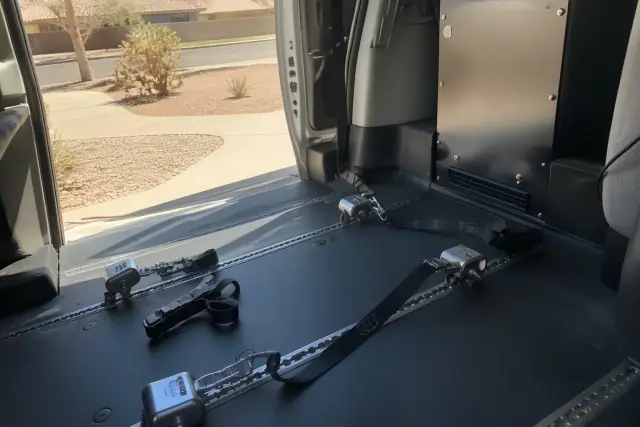
Wheelchair securement station with floor tracking and tie-down straps in a vehicle in Phoenix, AZ.

Match the Vehicle to Mobility Needs

A low cost trip begins with the smallest suitable vehicle and the right level of assistance. Ambulatory sedans cost less to operate than wheelchair vans, while stretcher and bariatric trips require more equipment and staffing.

  • Ambulatory transport for riders who do not require a wheelchair van or cot-equipped vehicle
  • Wheelchair vans with ramp or lift access, four-point securement, and seatbelt positioning
  • Stretcher transport with a cot, rated securement straps, and often a two-person crew
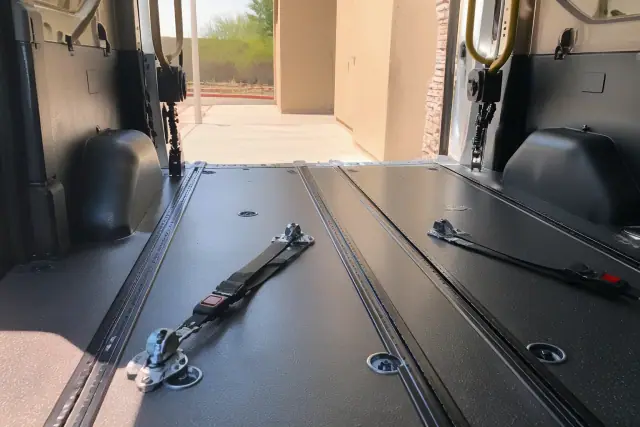
Wheelchair tie-down straps secured to floor tracks inside a vehicle in Phoenix, AZ.

Compare What Each Quote Includes

A budget friendly comparison looks beyond the headline rate to the assistance, coordination, and equipment included. Ask whether the quote covers a return trip and the support the patient needs from pickup through check-in.

  • Door-to-door help with mobility devices and check-in instead of curb-only drop-off
  • Attendant assistance, appointment wait time, and return-trip coordination
  • Mileage calculation, vehicle type, and any stretcher, oxygen, positioning, or bariatric equipment
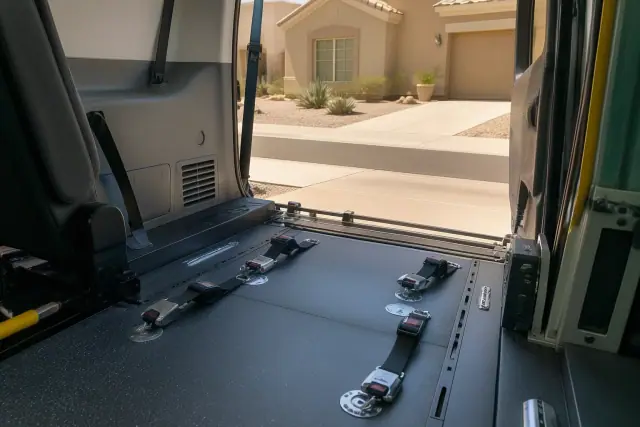
Wheelchair securement floor tracks and four-point tie-down straps inside a vehicle in Phoenix, AZ.

Protect Value Across Recurring Care

Searching for the lowest prices is useful only when each quote covers the same safe trip scope. Advance planning can reduce routing complexity and make recurring dialysis, follow-up, or senior transportation costs more predictable.

  • Book routine appointments a week out when possible so vehicle assignment is easier to plan
  • Use a consistent weekly or monthly cadence for recurring medical appointments
  • Combine a lab visit and follow-up on the same day when medically appropriate

Non-Emergency Medical Transportation Cost Factors in Phoenix

Trip distance, vehicle type, accessibility, attendant support, appointment timing, pickup conditions, and special equipment all influence Phoenix transportation pricing. Providing those details before dispatch produces a more useful estimate than comparing one-size-fits-all numbers.

Distance and Service Area

Mileage affects both local and long-distance trip costs. Travel within central Phoenix near Banner University Medical Center or downtown clinics generally costs less than trips to Sun Lakes, Buckeye, or Apache Junction, while specialty-care travel to Tucson or out-of-state facilities also reflects total mileage and trip duration.

Vehicle and Equipment Requirements

Ambulatory sedans, wheelchair vans, and stretcher-equipped vehicles have different operating and staffing costs. Bariatric transport can require a reinforced ramp, wider securement, and a two-person crew, while oxygen support or specialized positioning can also change the assigned vehicle and attendant level.

Pickup Access and Attendant Support

Stairs, long driveways, gated communities, and help with transfers can add time or staffing to a trip. Describing access conditions and whether the patient needs inside assistance, mobility-device help, or support through check-in keeps the pickup plan and estimate aligned.

Appointment Timing and Wait Time

Early-morning dialysis, a same-day request, and a routine appointment booked in advance create different scheduling demands. Hospital discharge transportation also requires coordination with case management on timing, mobility status, and the wheelchair, walker, or stretcher needed for transfer, while appointment wait time and return-trip coordination belong in the quoted scope.

Budget-Friendly Non-Emergency Medical Transportation Planning

Recurring dialysis and appointment rides are easier to budget when pickup times, destinations, vehicle needs, and return-trip plans are scheduled consistently. Families can also compare weekly or monthly transportation needs before committing to an ongoing cadence.

Confirm transportation benefits with the payer before booking. AHCCCS may coordinate eligible member transportation, some Medicare Advantage plans include non-emergency transportation as a supplemental benefit, and private-pay trips can be scoped with upfront pricing.

  1. Share the pickup, destination, appointment time, and patient's mobility level
  2. Identify any ramp, lift, cot, bariatric, oxygen, positioning, or attendant need
  3. Ask how mileage, appointment wait time, and round-trip coordination are calculated
  4. Confirm payer benefits or request the private-pay total before the ride

Request an Affordable Non-Emergency Medical Transportation Estimate in Phoenix

For accurate pricing, provide the pickup and destination, mobility level, appointment time, required equipment, attendant needs, and whether the trip includes waiting or a return ride. Phoenix Non Emergency Medical Transport can then build a cost-effective estimate around the actual trip instead of a generic rate.