Proudly serving Phoenix, Mesa, Glendale, Scottsdale, Tempe, Chandler & surrounding areasCall or Text 24/7: 602-449-8153
Aerial view of Phoenix, AZ, showing desert foothills, saguaro cacti, and residential neighborhoods at sunset.

Ambulatory Transportation in Phoenix, AZ: Door-to-Door Medical Rides for Routine Wellness & Appointments

Phoenix Non Emergency Medical Transport provides ambulatory transportation throughout Phoenix for patients who can walk short distances and enter a standard vehicle with minimal assistance. The service supports routine medical appointments, wellness visits, preventive care, and other trips where a rider needs more help than a rideshare provides. Door-to-door assistance is available for the walk from a home, lobby, or hallway to the vehicle and again at the destination. One-time rides and recurring treatment schedules are matched to the rider's mobility level.

Phoenix spans 517.9 square miles and has more than 1.6 million residents, so reaching care across the Salt River Valley can require careful timing. Rush-hour congestion on I-10 and Loop 202, limited family availability, and desert heat can make a routine appointment difficult for someone who cannot drive. Drivers complete patient-handling and CPR/First Aid training and adjust their pace for riders with fall risk. Climate-controlled vehicles and direct coordination with clinic staff help make pickups and appointment windows more predictable.

Each ambulatory trip is logged, tracked, and confirmed so families and care coordinators can follow pickup and drop-off status. For recurring clients, consistent driver assignments are used where possible to reduce anxiety and support a familiar routine. The booking team also helps explain insurance paperwork before the first ride.

Phoenix Non Emergency Medical Transport provides ambulatory transportation throughout Phoenix and the greater Maricopa County metro area, including Mesa, Scottsdale, Tempe, Glendale, and Chandler.

★ ★ ★ ★ ★4.9/5 Average Rating · 20+ Years of Experience · Thousands of Customers Helped · Licensed & Insured · Patients, Families & Care Teams

Phoenix Ambulatory Transport Benefits

What Is Ambulatory Transportation?

Ambulatory transportation is designed for patients who can walk short distances and get into or out of a standard vehicle with minimal assistance. It adds trained support, careful pacing, and medical-trip coordination beyond what a general rideshare driver provides.

This service fits routine doctor visits, wellness appointments, preventive care, surgery follow-ups, and other trips where a rider may need a steady arm or extra time. Operators recognize fall risk, adjust walking pace, and make sure the patient is properly seated and secured before departure.

Service runs on weekdays and weekends, and same-day medical transport is available when the schedule allows it. Trips can be booked once or placed on a standing weekly schedule, with mileage and wait-time charges explained before the vehicle arrives.

Benefits of Assisted Ambulatory Transport

Ambulatory service combines practical mobility help with the scheduling discipline required for medical care. Support is adjusted to the rider's abilities on the day of the appointment.

  • A steady arm and unhurried walking pace for patients with fall risk
  • Door-to-door help through homes, lobbies, hallways, and facility entrances
  • Drivers trained in patient handling and CPR/First Aid
  • Logged, tracked, and confirmed pickup and drop-off status
  • One-time bookings and standing schedules for recurring care
  • Appointment-window coordination with clinics and discharge planners
  • Climate-controlled comfort for travel in desert heat
  • Upfront explanations of mileage, wait time, and insurance paperwork
Mobility-Matched Transport

Specialized Medical Transport Services

When a rider needs more support than ambulatory transportation provides, the vehicle, equipment, and crew can be matched to the patient's current mobility level. These Phoenix services cover seated, stretcher, recurring-treatment, discharge, senior, and bariatric needs.

Wheelchair Transportation

Interior of a wheelchair accessible van with tie-down straps and desert scenery visible in Phoenix, AZ.

Side-entry and rear-entry lift vans accommodate standard, heavy-duty, and power wheelchairs without requiring a transfer unless medically necessary. WC19-compatible tie-down anchors, four-point securement, and lap and shoulder belts keep the chair stable during the ride.

Request Estimate

Stretcher Transportation

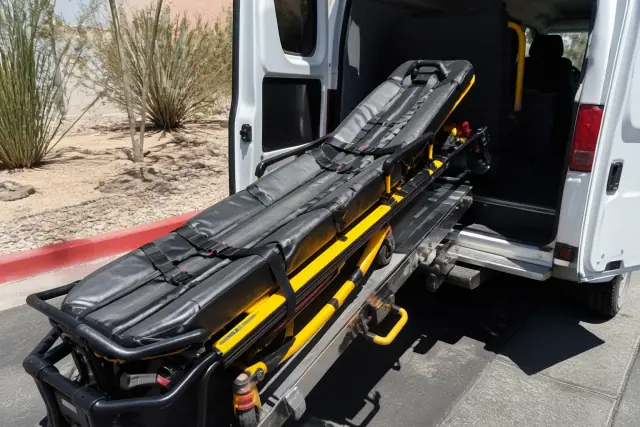
Stretcher secured at the rear of a medical transport vehicle during loading in Phoenix, AZ.

Stretcher service supports patients who cannot sit upright safely for the trip. A two-person crew uses hospital-grade cots with locking undercarriages and four-point securement while following body-mechanics protocols during each transfer.

Request Estimate

Dialysis Transportation

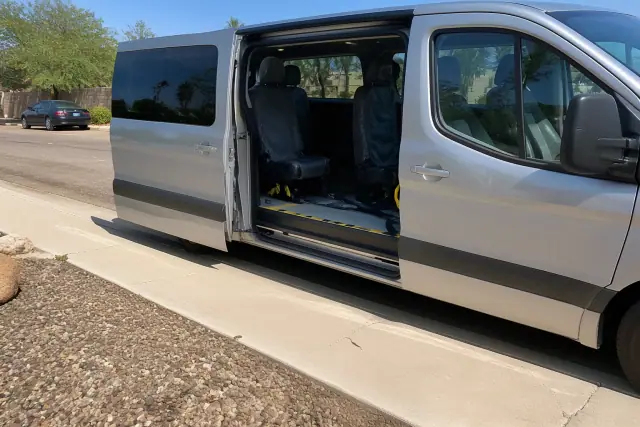
Transport van parked curbside for dialysis patient boarding in Phoenix, AZ.

Dialysis patients typically need transportation three times a week, so standing schedules are aligned with treatment-center time slots. The same driver is assigned where possible, helping patients manage fatigue and maintain a familiar routine after treatment.

Request Estimate

Senior Medical Transportation

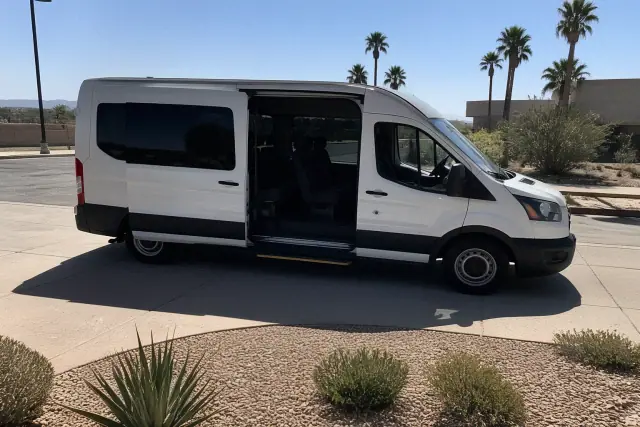
Medical transport van parked at a curbside pickup location with desert landscaping in Phoenix, AZ.

Senior transportation pairs clear communication and patient pacing with assistance for walkers, canes, and wheelchairs. Staff do not rush an 85-year-old patient through a transfer, and the support level can be adjusted when mobility changes from one appointment to the next.

Request Estimate

Bariatric Patient Transport

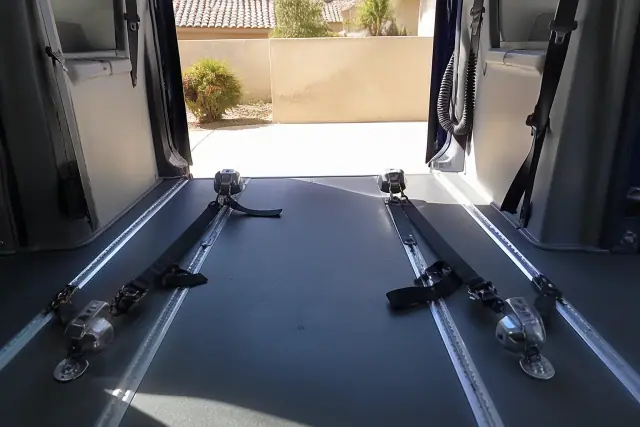
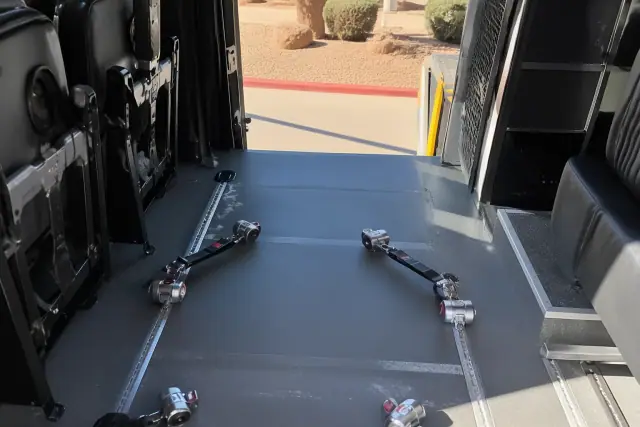
Heavy-duty four-point wheelchair tie-down straps locked into the floor tracks of a transport van in Phoenix, AZ.

Bariatric transport uses reinforced ramps, wide-door access, and heavy-duty wheelchairs and stretchers rated above standard capacities. Assigned crews receive additional training in safe lifting and equipment operation for larger-frame transfers.

Request Estimate

Hospital Discharge Transportation

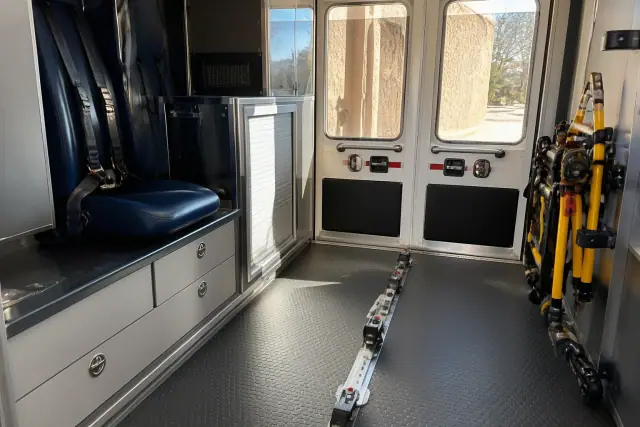
Interior of an ambulance patient compartment with medical equipment and safety restraints in Phoenix, AZ.

Dispatch coordinates pickup timing with case managers and discharge planners when requested, reducing long waits after a patient is cleared to leave. Post-surgery rides use careful positioning around incision sites and a smoother driving style, while staff watch for distress during the trip home.

Request Estimate
Ambulatory Trip Options

Ambulatory Transportation for Different Needs

Ambulatory trips can be organized around a single appointment, an ongoing care plan, a discharge, insurance requirements, or a longer regional journey. Booking the right option begins with the rider's mobility, destination, timing, and support needs.

Wheelchair securement station with tie-down straps inside a transport vehicle in Phoenix, AZ.

Routine Medical Appointments

One-time ambulatory rides help patients reach scheduled care when they cannot drive or depend on a family member. Extra walking time and facility-entry assistance can be planned with the appointment.

  • Doctor and specialist appointments
  • Oncology infusion visits
  • Post-surgical follow-up appointments
  • Wellness and preventive care visits
  • Confirmed pickup and drop-off status
Request Estimate
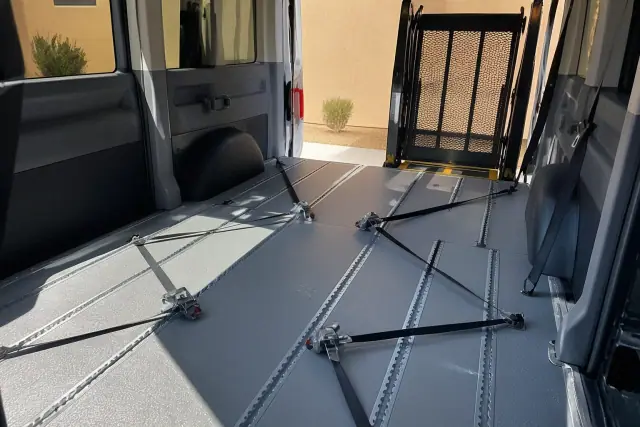
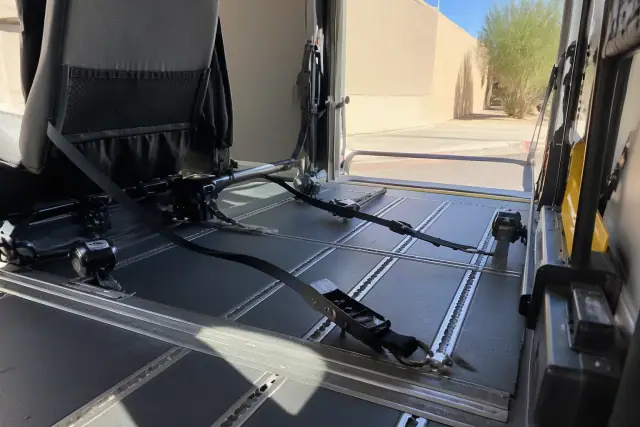
Interior of an ambulatory transport vehicle in Phoenix, AZ, showing floor tracks and four-point tie-down straps.

Recurring Treatment Schedules

Standing weekly bookings reduce the need to arrange every treatment ride separately. Dispatch aligns pickup plans with the treatment center's time slots and can keep driver assignments consistent where possible.

  • Standing weekly transportation plans
  • Schedules aligned with treatment-center time slots
  • Consistent drivers where assignments allow
  • Trip tracking for families and care coordinators
  • Wait-time details reviewed during booking
Request Estimate
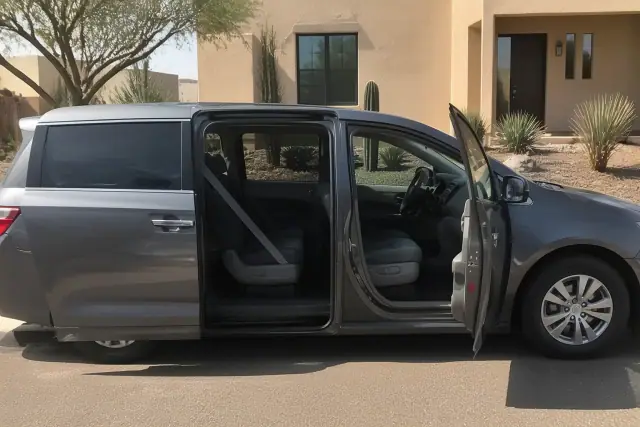
Transportation vehicle with open doors for curbside passenger boarding assistance at a residence in Phoenix, AZ.

Door-to-Door Assistance

Door-to-door transport extends beyond the curb when a patient needs help reaching the vehicle or facility entrance. The same assistance is provided in reverse at the destination.

  • Inside pickup assistance when needed
  • Support through lobbies and hallways
  • Help managing walkers and canes
  • Walking pace adjusted to the rider
  • Assistance from the vehicle into the destination
Request Estimate
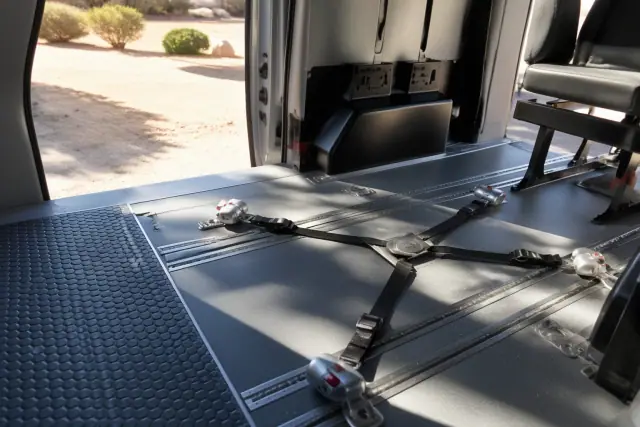
Interior of an ambulatory transport vehicle with wheelchair tie-down straps in Phoenix, AZ.

Insurance-Coordinated Transportation

Coverage is reviewed before scheduling so riders understand whether AHCCCS or another plan authorizes the trip. The team can help with eligibility checks, benefit verification, and documentation for recurring transportation.

  • AHCCCS eligibility verification
  • Insurance transport-benefit review
  • Prior-authorization assistance
  • Recurring-trip documentation support
  • Coverage details explained before scheduling
Request Estimate
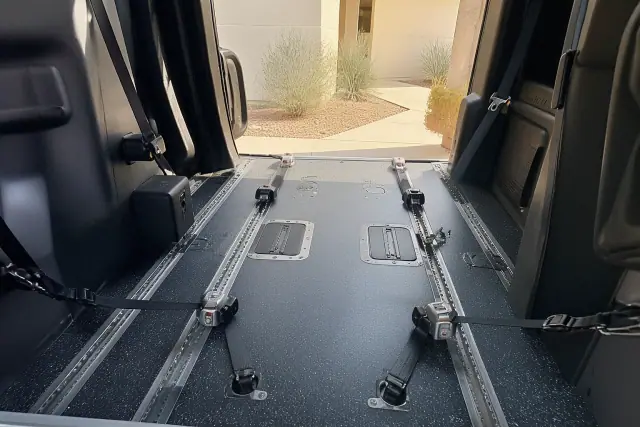
Wheelchair securement station with four-point tie-down straps inside a medical transport vehicle in Phoenix, AZ.

Long-Distance Medical Transportation

Long-distance transport covers care beyond the Phoenix metro area, including regional specialist visits, rehabilitation transfers, and continued-care travel. Routes are planned around the patient's mobility and oversight needs.

  • Specialist visits in Tucson
  • Rehabilitation facility transfers
  • Interstate travel for continued care
  • Scheduled rest and monitoring stops
  • Escort support and communication with dispatch
Request Estimate
Match Support to Mobility

Choosing the Right Medical Transport Approach

Ambulatory transportation fits riders who can walk a short distance and enter a standard vehicle with minimal help. A lift-equipped wheelchair vehicle is appropriate when the patient must remain in a chair, stretcher transport is intended for someone who cannot sit upright safely, and bariatric transport provides reinforced equipment for larger-frame transfers.

Trained Patient Handling

Drivers complete patient-handling and CPR/First Aid training before transporting riders. They recognize fall risk, adjust walking pace, and use transfer techniques suited to the patient's mobility.

Medical Facility Coordination

Dispatch can confirm appointment windows with clinic front desks and pickup timing with hospital case managers or discharge planners. This coordination helps reduce missed pickups and unnecessary waiting.

Accessible, Climate-Controlled Fleet

The fleet includes hydraulic wheelchair lifts, ADA-compliant ramps, multi-point stretcher securement, and climate-controlled patient space. Vehicle features are matched to the rider's mobility needs and Phoenix travel conditions.

What Sets Us Apart

Why Choose Us for Phoenix Ambulatory Transportation?

Phoenix Non Emergency Medical Transport emphasizes consistent operators, careful patient support, and clear communication from booking through drop-off. Patient details and appointment information are handled under HIPAA-compliant practices, while pricing and insurance paperwork are reviewed before the ride is placed on the schedule.

Request a Transportation Quote

No Reliable Ride to Care

Patients who cannot drive may have no dependable way to reach a dialysis chair, infusion suite, or follow-up visit when relatives are unavailable. Scheduled medical transport replaces last-minute ride searching with a confirmed pickup plan.

Fall Risk or Limited Walking Endurance

A patient may be able to walk but still need a steady arm, slower pace, or help through a long lobby. Ambulatory operators adjust assistance to the rider's ability that day instead of assuming full independence.

Missed Recurring Treatments

Recurring care becomes harder when each ride must be arranged from scratch. Standing schedules tied to treatment-center time slots create a repeatable plan and keep pickup and drop-off status visible to families and care coordinators.

Wheelchair Access Barriers

A standard sedan or rideshare may require a transfer out of the patient's wheelchair. Lift- and ramp-equipped vehicles allow riders to remain in standard, heavy-duty, or power chairs unless a transfer is medically necessary.

Complex Hospital Discharges

Patients may be cleared to leave before a family member can arrive, while discharge teams need an accurate pickup time. Direct communication with case managers helps coordinate the transition home and reduce waiting in the hospital lobby.

Phoenix Heat Exposure

Phoenix summer temperatures routinely exceed 110 degrees, making outdoor waits especially difficult for patients with limited mobility. Climate-controlled vehicles reduce exposure while careful timing limits unnecessary time at the curb.

How It Works

Our Ambulatory Transportation Process

The booking process begins with the appointment and mobility details, then moves through vehicle assignment, confirmation, assisted pickup, transport, and drop-off. Each step is designed to match the rider's actual support needs.

01.

Share Trip and Mobility Details

Provide the pickup address, appointment time, destination, and the rider's current mobility level. Mention fall risk, walking aids, facility-entry help, or recurring scheduling needs.

02.

Match the Vehicle and Support

Dispatch assigns ambulatory, wheelchair, stretcher, or bariatric resources according to the patient's ability to walk, sit upright, and transfer safely. Crew size and equipment follow that selection.

03.

Confirm Timing and Coverage

The team confirms the pickup plan and can coordinate appointment windows with the medical facility when requested. Insurance benefits, AHCCCS eligibility, prior authorization, mileage, and wait time are reviewed when they apply.

04.

Receive Door-to-Door Assistance

The driver can come inside when needed, assist the rider through the home or lobby, and move at a safe pace to the vehicle. Walkers and canes are handled with the patient's other belongings.

05.

Ride with Safe Securement

The patient is seated and secured before the vehicle moves, with wheelchair or stretcher protocols used whenever those service levels are required. Climate control and a measured driving style support comfort during the trip.

06.

Confirm Arrival and Return Needs

At the destination, the driver provides the same door-to-door assistance in reverse and confirms drop-off status. Round trips, wait time, or the next recurring pickup can be handled according to the booking plan.

Plan Your Ride

Schedule Phoenix Ambulatory Transportation

Tell the booking team where the patient is going, when the appointment begins, and what mobility help is needed. Call or request a quote to plan a one-time ride or recurring medical transportation schedule.

Planning Your Ride

Phoenix Ambulatory Transportation FAQs

These answers cover mobility levels, costs, insurance, accessibility, booking, and scheduling for ambulatory and related non-emergency medical transportation in Phoenix.

Call About Transportation

The right option depends on the senior's current mobility level. Ambulatory transportation fits riders who can walk with minimal help, while wheelchair users need a lift-equipped vehicle and patients who cannot sit upright safely need stretcher service. Seniors with fall risk, cognitive decline, or post-surgical needs may also benefit from door-to-door assistance.

Original Medicare typically does not cover routine non-emergency medical transportation, but Part B may cover non-emergency ambulance transport when a physician documents medical necessity. Some Medicare Advantage plans include limited NEMT benefits. AHCCCS covers NEMT for eligible Arizona members traveling to approved medical and behavioral health appointments.

Phoenix Non Emergency Medical Transport offers ambulatory, wheelchair, stretcher, bariatric, dialysis, medical appointment, hospital discharge, senior, door-to-door, and long-distance medical transportation. Vehicles and staffing are matched to the patient's mobility level. Service extends across Phoenix, Mesa, Scottsdale, Tempe, Glendale, Chandler, and the wider Maricopa County area.

Ambulatory transport generally costs $125 to $400 total for trips under 100 miles, wheelchair transport typically costs $45 to $100 per trip, and stretcher service commonly starts around $100 to $225 before distance and crew needs raise the total. Bariatric and long-distance trips cost more because they require specialized equipment or extended travel. A cost breakdown is provided before dispatch.

The Americans with Disabilities Act requires transportation providers to accommodate passengers with disabilities through accessible vehicles and reasonable assistance. Federal Medicaid regulation 42 CFR 431.53 also requires state Medicaid programs to ensure NEMT access for eligible members who need transportation to covered care. The fleet includes ADA-compliant lifts and ramp-equipped vans.

Most non-emergency medical transportation is priced per trip based on the service level and mileage instead of a single hourly rate. Wait-time charges may apply for round-trip appointments such as dialysis or infusion visits. Long-distance transportation commonly uses a base rate plus mileage.

Ambulatory transportation is for patients who can walk short distances and enter or exit a standard vehicle with minimal assistance. It is useful when the rider still needs a steady arm, extra time, fall-risk awareness, or help through a home or facility entrance.

The driver can come inside when needed, help the patient reach the vehicle, and provide the same assistance from the vehicle into the destination. This support can include moving through a hallway or lobby and helping manage a walker or cane.

Yes. Standing weekly transportation can be arranged for ongoing treatment plans, with pickups aligned to the facility's appointment slots. Consistent driver assignments are used where possible.

Provide the pickup address, appointment time, destination, and the patient's mobility level. Also mention fall risk, walking aids, door-to-door assistance, recurring scheduling, and any insurance or authorization details that need review.

Ambulatory service runs on weekdays and weekends. The available pickup time depends on the schedule, so appointment details should be shared during booking.

Same-day medical transport is available when the schedule allows it. Calling with the pickup location, appointment time, and mobility needs gives dispatch the information required to check availability.

Choose ambulatory transport when the patient can walk a short distance and enter a standard vehicle with minimal help. Choose wheelchair transport when the rider needs to remain in a chair and use a lift or ramp. Stretcher transport is intended for patients who cannot sit upright safely during the trip.