Proudly serving Phoenix, Mesa, Glendale, Scottsdale, Tempe, Chandler & surrounding areasCall or Text 24/7: 602-449-8153
Aerial view of Phoenix, AZ, showing desert foothills, saguaro cacti, and residential neighborhoods at sunset.

Door-to-Door Medical Transportation in Phoenix, AZ: Attendant-Assisted Travel & Curb-to-Entrance Support

Phoenix Non Emergency Medical Transport provides door-to-door medical transportation across Phoenix and the surrounding metro. We match each trip to wheelchair, stretcher, ambulatory, or bariatric transportation needs. Our team also coordinates dialysis rides, medical appointments, hospital discharges, senior transportation, and long-distance medical travel. From pickup to arrival, the driver assists at the actual door instead of leaving the patient at the curb.

Phoenix spans 517.9 square miles, so a trip from Ahwatukee or Sun City to a dialysis chair or downtown cardiology appointment can be demanding for someone managing mobility equipment or recovering from surgery. Summer pavement temperatures regularly rise past 150 degrees, making a climate-controlled cabin important throughout the ride. Vehicles are sanitized between transports and equipped for the assigned mobility need, from hydraulic wheelchair lifts to certified stretcher mounts. Drivers hold current CPR and first aid certification, complete background screening, and train in safe transfers, bariatric handling, and dementia patient communication.

HIPAA-compliant handling protects health information, appointment details, and transport history. Call before booking to discuss the pickup, destination, mobility needs, upfront pricing, and whether Medicare, Medicare Advantage, or AHCCCS coverage may apply.

Phoenix Non Emergency Medical Transport provides door-to-door medical transportation in Phoenix and the surrounding metro, including Scottsdale, Tempe, Mesa, Glendale, Chandler, and Sun City.

★ ★ ★ ★ ★4.9/5 Average Rating · 20+ Years of Experience · Thousands of Customers Helped · Licensed & Insured · Patients, Families & Care Teams

Door-to-Door Medical Transport Options in Phoenix

What Door-to-Door Medical Transportation Includes

Non-emergency medical transportation fills the space between a 911 ambulance and an unassisted car ride. In a metro area of 5.19 million people, it supports patients who need more help than a rideshare provides but do not require emergency response.

Door-to-door service starts at the patient?s actual door rather than the curb. The driver assists with the transfer into the assigned vehicle, supports a secure ride, and repeats that help at the medical facility, home, or care destination.

The pickup window is coordinated around facility intake, treatment timing, discharge planning, or the distance to a regional destination. Recurring dialysis and therapy rides can be placed on a standing schedule.

Benefits of Supported Door-to-Door Travel

The right medical ride combines mobility assistance, suitable equipment, and clear coordination from one door to the next. That support can reduce the physical and logistical burden on patients, families, and care teams.

  • Assistance at both the pickup door and destination
  • Wheelchair, stretcher, ambulatory, or bariatric vehicle matching
  • Climate-controlled cabins for Phoenix heat
  • Vehicles sanitized between patient transports
  • Coordination around appointments and hospital discharges
  • Standing schedules for recurring treatment rides
  • Patient handling tailored to mobility and communication needs
  • HIPAA-compliant handling of trip and health information
Medical Transport Services

Phoenix Medical Transportation Services

Door-to-door support is available across several levels of mobility and care. The assigned vehicle, equipment, and crew are selected around how the patient transfers, rides, and arrives safely.

Wheelchair Transportation

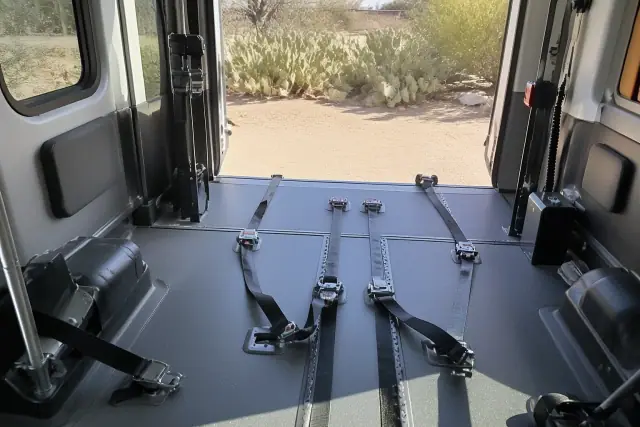
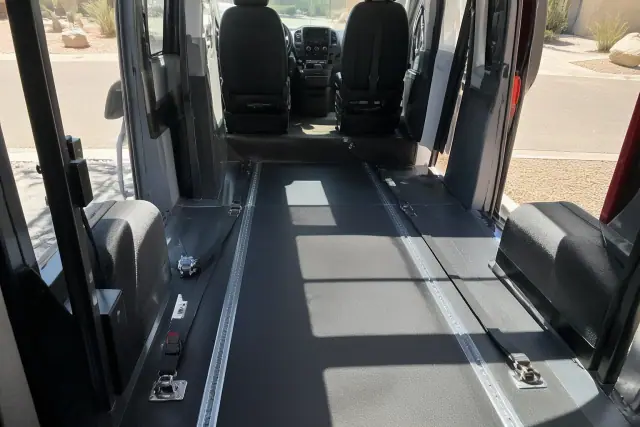
Interior of a wheelchair-accessible medical transport van with floor tie-down straps in Phoenix, AZ.

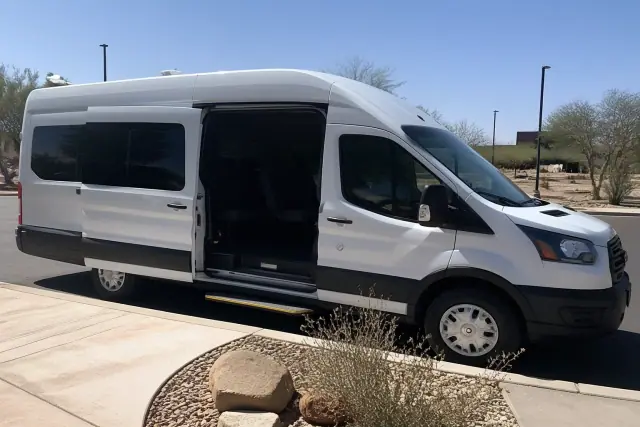
Wheelchair-accessible vans use hydraulic or ramp-style lifts for standard and heavy-duty wheelchairs. Four-point tie-down securement follows the same restraint principles used in ADA-compliant paratransit vehicles, while secured flooring, grab rails, and interior lighting support trips to locations such as Banner University Medical Center and HonorHealth facilities.

Request Estimate

Stretcher Transportation

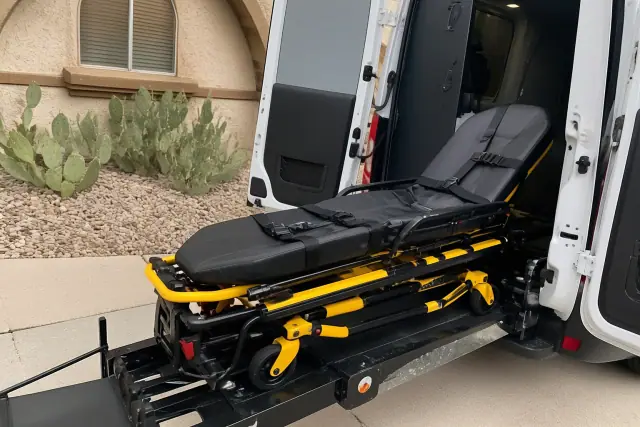
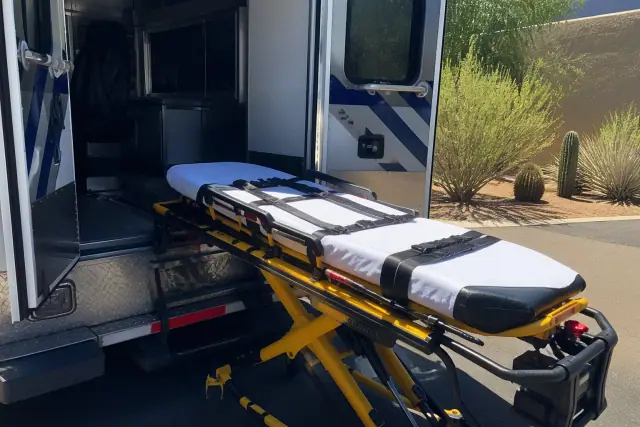
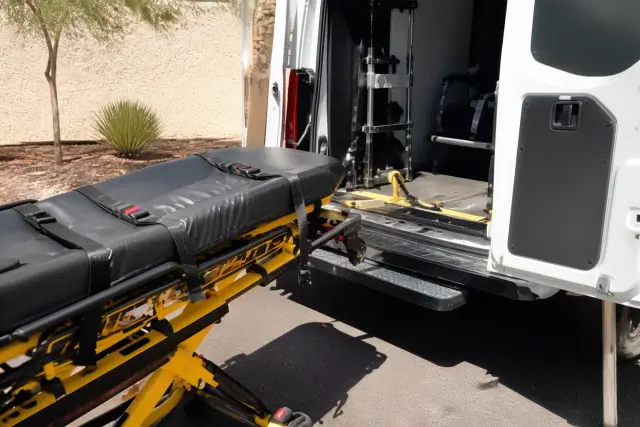
A medical transport stretcher with safety belts and locking mechanisms at a residential building in Phoenix, AZ.

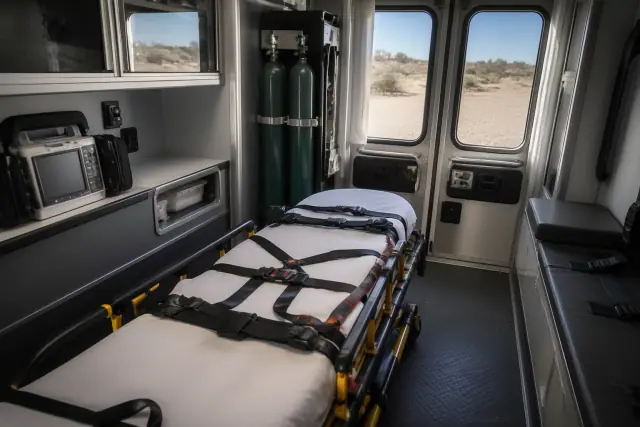
Stretcher transportation serves patients who cannot sit upright after orthopedic surgery, spinal injury, or advanced illness. Locking cot systems, adjustable head elevation, and restraint straps support supine travel, while two-person crews manage loading and unloading and review oxygen therapy, IV lines, or catheter equipment before travel on routes such as I-10 and I-17.

Request Estimate

Ambulatory Transportation

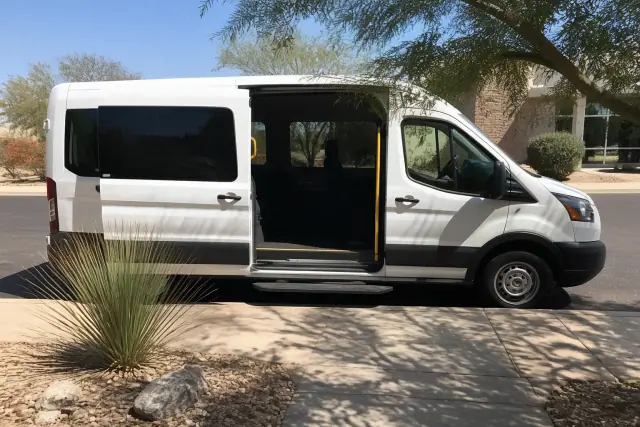
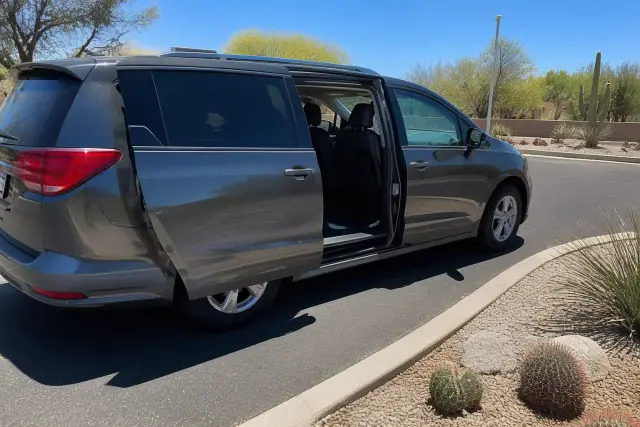
Ambulatory medical transport vehicle with open doors for passenger boarding at a curbside in Phoenix, AZ.

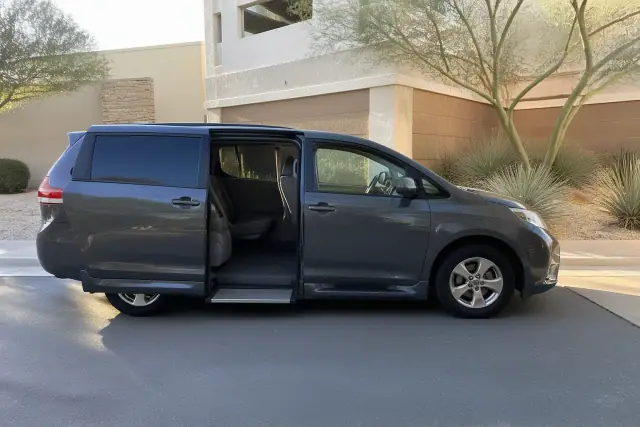
Ambulatory rides use sedans or standard vans for patients who can walk short distances and sit upright without a wheelchair or stretcher. They fit doctor appointments, physical therapy, lab work, and clinic visits, with curb-to-curb or door-to-door pickup based on need and climate-controlled cabins for Phoenix days when summer highs regularly exceed 110 degrees.

Request Estimate

Bariatric Transportation

Wheelchair securement station with tie-down straps inside a medical transport van in Phoenix, AZ with cacti outside.

Bariatric transportation uses reinforced flooring, wider door frames, and higher weight-rated lifts than standard wheelchair vehicles. Crews receive additional training in body mechanics and multi-person lift technique so loading and unloading can be handled with safety, discretion, and respect.

Request Estimate

Dialysis Transportation

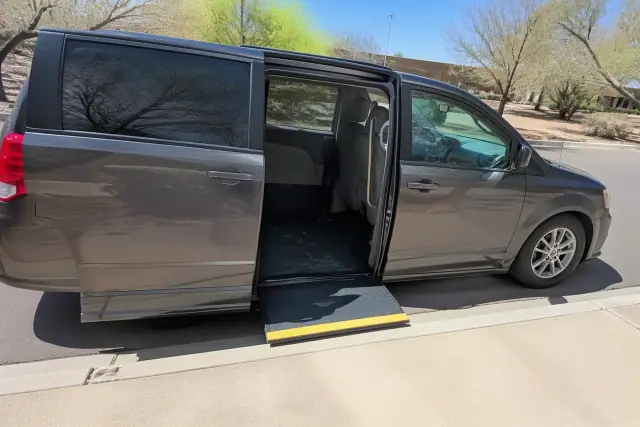
Wheelchair van with open sliding door and ramp at a dialysis clinic in Phoenix, AZ.

Dialysis patients typically travel three times a week, and treatment sessions can last four hours. Standing schedules align pickup windows with early-morning or evening clinic shifts, while drivers account for post-dialysis fatigue and low blood pressure risk on the ride home. Facilities using structured, GPS-tracked NEMT dispatch report missed-appointment rates dropping from around 20-30% into the single digits.

Request Estimate

Hospital Discharge Transportation

Medical transport van parked at a curb in Phoenix, AZ, with open sliding doors near a building with desert landscaping.

Hospital discharge transportation is coordinated with discharge planners and case managers before the patient is ready to leave. The ride can accommodate walkers, portable oxygen, wound-care needs, and post-surgical mobility limits, then continue into recurring follow-up transportation instead of ending as a one-time drop-off.

Request Estimate
Mobility & Care Options

More Medical Transportation Options

Some trips are defined less by the vehicle than by the patient?s care plan, destination, or travel distance. These options extend door-to-door coordination to older adults, recurring appointments, facility transfers, post-surgical recovery, and regional specialty care.

Medical transport vehicle parked at a curb in Phoenix, AZ, with side doors open for boarding.

Senior Medical Transportation

Senior transportation supports older adults across Phoenix, Sun City, Sun City West, and greater Maricopa County with equipment and pacing suited to age-related mobility and communication needs.

  • Low-step vehicles for easier entry and exit
  • Secure grab handles for balance support
  • Patient communication for dementia and memory care
  • Extra time for hearing or balance limitations
  • Recurring geriatric, chronic-disease, and specialty-care rides
Request Estimate
Medical transportation vehicle with open side doors for curbside pickup in Phoenix, AZ, near desert landscaping.

Medical Appointment Transportation

Medical appointment transportation coordinates routine and specialty visits around the patient?s mobility needs, pickup location, and clinic schedule.

  • Doctor and specialist appointments
  • Physical therapy visits
  • Laboratory and imaging trips
  • Clinic and treatment-center transportation
  • Recurring ride coordination for ongoing care
Request Estimate
Stretcher loading procedure into a medical transport vehicle in Phoenix, AZ, showing safety belts and locking mechanisms.

Long-Distance Medical Transportation

Long-distance medical transportation connects patients with specialty care beyond the Phoenix metro or supports a return home after out-of-state treatment.

  • Regional specialty treatment trips
  • Cancer treatment transportation
  • Cardiac care transportation
  • Out-of-state care and relocation travel
  • Wheelchair, stretcher, or bariatric accommodations
Request Estimate
Secured medical equipment, oxygen tanks, and stretcher straps inside a medical transport vehicle in Phoenix, AZ.

Inter-Facility Medical Transportation

Inter-facility transportation helps move a patient between hospitals, skilled nursing facilities, imaging centers, specialist offices, and treatment locations as the care plan requires.

  • Hospital-to-skilled-nursing transfers
  • Coordination with case managers
  • Stretcher support for supine patients
  • Transport of oxygen and other care equipment
  • Multi-stop routes for connected appointments
Request Estimate
A medical stretcher secured to a transport vehicle for loading in Phoenix, AZ.

Post-Surgical Transportation

Post-surgical transportation supports the transition from a hospital or clinic to home and back to scheduled follow-up care.

  • Mobility assistance after orthopedic procedures
  • Support for patients who cannot sit upright
  • Room for walkers and portable oxygen
  • Attention to wound-care and transfer needs
  • Recurring rides for follow-up appointments
Request Estimate
Why Families Choose Us

Support Designed Around Each Patient

A dependable trip depends on the people, vehicle, and coordination behind it. Phoenix Non Emergency Medical Transport brings those pieces together around the patient?s mobility, comfort, privacy, and schedule.

Trained and Screened Drivers

Drivers hold current CPR and first aid certification, complete background screening consistent with Arizona Department of Health Services standards, and train in safe transfers, bariatric handling, and dementia patient communication.

Mobility-Matched Vehicles

The fleet includes wheelchair-accessible vans, stretcher-equipped vehicles, ambulatory sedans and vans, and bariatric units. Each vehicle is climate controlled, sanitized between transports, and assigned according to the patient?s mobility needs.

Patient-Centered Coordination

Trip planning can include family caregivers, facility staff, discharge planners, case managers, and recurring treatment schedules. HIPAA-compliant handling keeps health information, appointment details, and transport history protected during that coordination.

When Extra Help Matters

Medical Transportation Challenges We Address

A standard car ride may not provide the transfer help, securement, equipment, or scheduling a patient needs. Door-to-door medical transportation is designed for the practical challenges that can otherwise interrupt safe access to care.

Request a Transport Quote

Curbside Pickup Is Not Enough

Patients using walkers, wheelchairs, oxygen, or post-surgical support may need help before they ever reach the curb. The driver comes to the actual door, assists with the transfer, and provides the same support at the destination.

Wheelchair Securement Concerns

A wheelchair ride requires more than space inside a van. Suitable lifts, secured flooring, grab rails, and four-point tie-downs help keep the chair stable from loading through arrival.

The Patient Cannot Sit Upright

Orthopedic surgery, spinal injury, or advanced illness can make seated travel unsuitable. Stretcher-equipped vehicles provide locking cot systems, adjustable head elevation, restraints, and a trained two-person loading crew.

Heat Exposure Between Stops

Phoenix heat can turn an ordinary wait or vehicle transfer into a serious comfort concern. Climate-controlled vehicles help protect patients during local and extended trips, especially when fatigue, recovery, or medical equipment adds strain.

Missed Recurring Treatments

Dialysis, chemotherapy, cardiac follow-ups, and physical therapy depend on consistent arrival. Standing schedules and coordination with treatment-center intake times reduce the need to rebuild each ride from scratch.

Complicated Hospital Discharges

A patient leaving the hospital may have limited mobility, a walker, portable oxygen, wound-care needs, or follow-up appointments already planned. Coordinating with the discharge team helps the ride fit the next stage of care.

How It Works

Our Door-to-Door Transport Process

Every trip starts with the patient?s mobility needs and ends with a supported arrival. Clear details help match the schedule, vehicle, equipment, and crew before pickup.

01.

Share the Trip Details

Provide the pickup address, destination, appointment or discharge time, and whether the trip is one-way, round-trip, recurring, multi-stop, or long-distance.

02.

Explain Mobility and Equipment Needs

Tell the scheduling team whether the patient walks, uses a wheelchair, must remain on a stretcher, needs bariatric accommodations, or travels with oxygen, IV lines, a catheter, or a walker.

03.

Match the Vehicle and Crew

The trip is assigned to an ambulatory, wheelchair, stretcher, or bariatric vehicle with the lift, securement, cot system, capacity, and crew support the patient requires.

04.

Confirm the Pickup Schedule

The pickup window is coordinated around facility intake, treatment timing, discharge planning, or the distance to a regional destination. Recurring dialysis and therapy rides can be placed on a standing schedule.

05.

Receive Door-to-Door Assistance

At pickup, the driver comes to the door, supports the transfer, secures the patient and mobility equipment, and maintains a climate-controlled ride suited to the patient?s condition.

06.

Complete the Arrival and Follow-Up

At the destination, the driver assists from the vehicle to the door and coordinates with family or facility staff when needed. Return rides and future appointments can then be scheduled around the care plan.

Plan a Supported Ride

Schedule Your Door-to-Door Medical Ride

Call Phoenix Non Emergency Medical Transport to discuss the patient?s pickup, destination, mobility needs, equipment, schedule, and pricing before booking. We will help identify the appropriate door-to-door transportation option for the trip.

Phoenix Transport Help

Door-to-Door Medical Transportation FAQs

These answers cover pricing, coverage, mobility support, scheduling, and common medical transportation options in Phoenix. Call with the patient?s specific trip details so the vehicle and assistance level can be reviewed before booking.

Call About a Ride

Non-emergency medical transport in the Phoenix area is typically priced by trip, with common base rates of $50 to $300 depending on vehicle type, distance, and assistance level. Mileage beyond a base zone may run roughly $3 to $10 per mile, while some short local trips are structured at $15 to $30 per half hour. Phoenix Non Emergency Medical Transport quotes the pickup, destination, and mobility needs upfront before booking.

Fully independent seniors may use rideshare, while public paratransit can cover broad areas through advance-scheduled shared rides. Dedicated senior medical transportation adds direct assistance for walkers, wheelchairs, dementia, balance limitations, and post-hospital recovery. Door-to-door service supports the patient from the pickup door to the vehicle and again at the destination.

Original Medicare covers non-emergency transportation only in limited circumstances, generally when a physician certifies that another form of travel would endanger the patient?s health, and coverage commonly applies to ambulance-level transport rather than a standard NEMT van. Some Medicare Advantage plans include supplemental transportation benefits, so coverage varies by plan. AHCCCS covers non-emergency medical transportation more broadly for eligible members traveling to covered appointments. Check the specific plan documents or call the plan before scheduling.

Available options include wheelchair, stretcher, ambulatory, bariatric, dialysis, medical appointment, hospital discharge, senior, door-to-door, inter-facility, and long-distance transportation. The appropriate option depends on whether the patient can walk, sit upright, transfer safely, and travel with mobility or care equipment.

Yes. Phoenix Non Emergency Medical Transport operates as a licensed and insured provider following Arizona Department of Health Services guidance for non-emergency transport operations. Drivers hold current CPR and first aid certification, complete background screening, and receive ongoing patient-handling and HIPAA training, while vehicles are maintained and inspected on a regular schedule.

Same-day transportation is available when the required vehicle and crew are open. Stretcher and bariatric trips generally need more lead time than ambulatory or wheelchair rides because of equipment and staffing requirements. Call as early as possible, and place recurring dialysis or therapy trips on a standing schedule when you can.

Yes. Drivers train in calm communication, patient transfers, and coordination with family caregivers or facility staff for dementia and memory-care patients. Extra time is allowed rather than rushing the process, and consistent drivers may be coordinated with Phoenix-area senior living or memory-care facilities when scheduling allows.

The driver comes to the patient?s actual door, helps with the transfer into the assigned vehicle, and secures the patient and mobility equipment for travel. At the destination, the driver repeats that assistance from the vehicle to the door. The level of help is planned around ambulatory, wheelchair, stretcher, or bariatric needs.

Wheelchair vehicles use hydraulic or ramp-style lifts, secured flooring, grab rails, and four-point tie-down systems for standard and heavy-duty wheelchairs. These securement principles align with those used in ADA-compliant paratransit vehicles. Share the wheelchair type when scheduling so the vehicle can be matched appropriately.

Stretcher transportation is appropriate when a patient cannot sit upright for the trip because of orthopedic surgery, spinal injury, or advanced illness. The vehicles use locking cot systems, adjustable head elevation, and restraint straps, and two-person crews handle loading and unloading. Oxygen therapy, IV lines, and catheter equipment should be discussed before pickup.

Yes. Dialysis patients often travel three times a week, so recurring rides can use a standing pickup window aligned with the treatment center?s intake time. Drivers also account for fatigue and low blood pressure risk after a four-hour session by providing a smoother, slower ride home.

Yes. Hospital discharge transportation can be arranged with discharge planners and case managers before the patient is ready to leave. The trip can account for post-surgical mobility, walkers, portable oxygen, wound-care needs, and a stretcher when the patient cannot sit upright. Follow-up rides can also be coordinated after the discharge trip.

Long-distance trips can use the same wheelchair, stretcher, ambulatory, or bariatric accommodations available for local transportation. They may connect patients with regional specialty, cancer, or cardiac care, support multi-stop medical routes, or help a patient return home after out-of-state treatment. The distance, care destinations, mobility needs, and equipment should be reviewed before scheduling.