Proudly serving Phoenix, Mesa, Glendale, Scottsdale, Tempe, Chandler & surrounding areasCall or Text 24/7: 602-449-8153
Aerial view of Phoenix, AZ, showing desert foothills, saguaro cacti, and residential neighborhoods at sunset.

Medical Transport in Peoria, AZ: West Valley Clinic Transfers & Hospital Discharge Service

Phoenix Non Emergency Medical Transport provides non-emergency medical transportation throughout Peoria and the West Valley. We arrange wheelchair, stretcher, and ambulatory transportation for medical appointments, dialysis visits, and hospital discharges. Bariatric, senior, door-to-door, and long-distance options help match each trip to the passenger's mobility and destination. Our service also connects Peoria riders with hospitals and specialty clinics across Glendale, Surprise, Sun City, Sun City West, northern Phoenix, Scottsdale, and Tucson.

Peoria routes can stretch from Lake Pleasant in the north to the Agua Fria River corridor, creating long in-city drives between residences and medical facilities. The city's footprint crosses Maricopa and Yavapai counties, adding planning considerations for recurring care and cross-city appointments. Public transit and general rideshare options do not always align with strict treatment windows or accommodate wheelchairs, stretchers, and bariatric equipment. Our scheduling accounts for mobility equipment, appointment timing, safe transfers, and recurring care so patients, families, and facility staff have a clear ride plan.

Call dispatch with the pickup address, destination, appointment time, mobility equipment, and assistance needs. Booking ahead improves access to a preferred pickup window, while same-day requests are accommodated when vehicle and driver availability allows.

★ ★ ★ ★ ★4.9/5 Average Rating - 20+ Years of Experience - Thousands of Customers Helped - Licensed & Insured - Patients, Families & Care Teams
Accessible Transportation Services

Non-Emergency Medical Transportation in Peoria, AZ

Our Peoria service range covers individual medical appointments, recurring treatments, hospital and facility transfers, and trips that require wheelchair, stretcher, or bariatric equipment. Routes include central Peoria near Peoria Avenue and 83rd Avenue, Arrowhead Ranch, Vistancia, and the city's northern and southern neighborhoods. We also coordinate rides between Peoria and Sun City, AZ when patients need access to West Valley clinics and care facilities.

Wheelchair Transportation

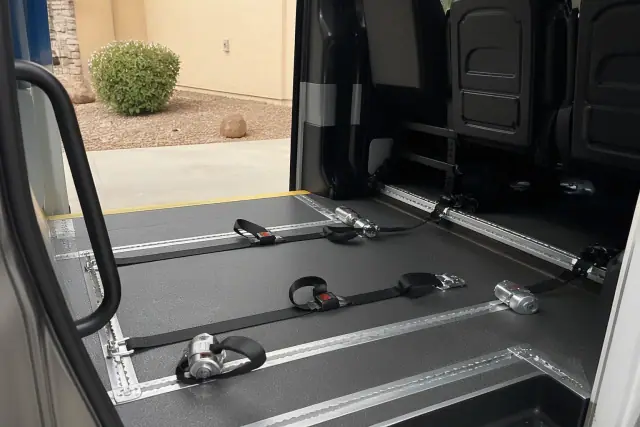
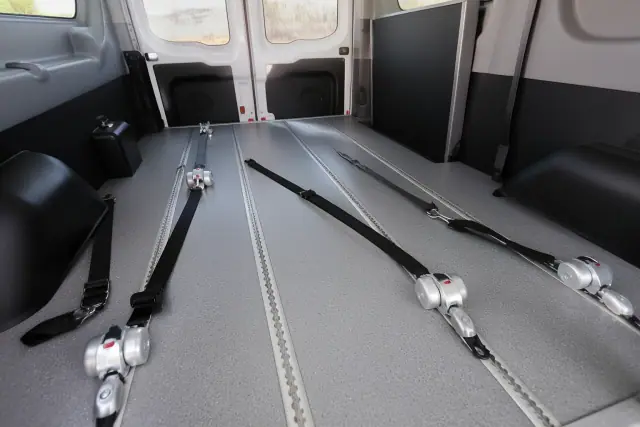
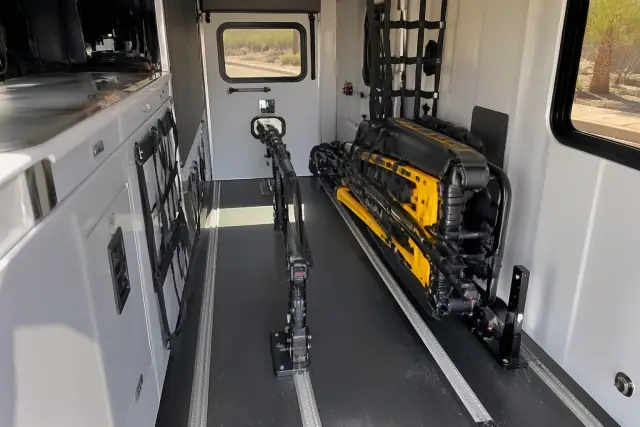
Wheelchair securement station with tie-down straps inside a medical transport van in Peoria, AZ.

Lift- and ramp-equipped vehicles accommodate manual wheelchairs, power chairs, scooters, and bariatric wheelchairs. A four-point securement system stabilizes the chair during transit, and the vehicle is matched to the equipment details shared during booking.

Explore Service

Stretcher Transportation

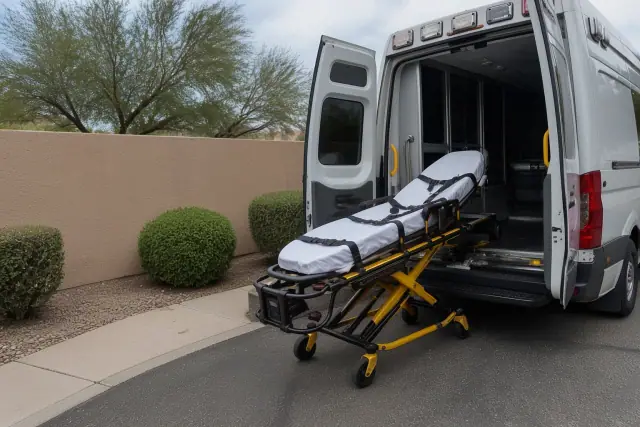
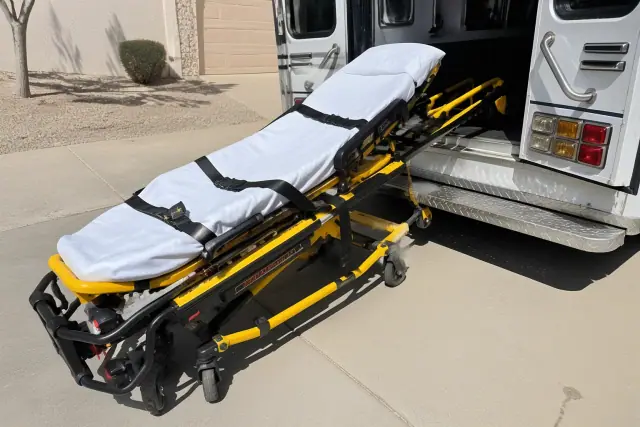
Medical transport stretcher being loaded into a vehicle at a job site with desert landscaping in Peoria, AZ.

Patients who cannot sit upright can travel in a vehicle fitted with a secured gurney system, safety straps, and staff trained in transfer body mechanics. Stretcher service is scheduled in advance for hospital, skilled nursing, facility, and long-distance transfers.

Explore Service

Ambulatory Transportation

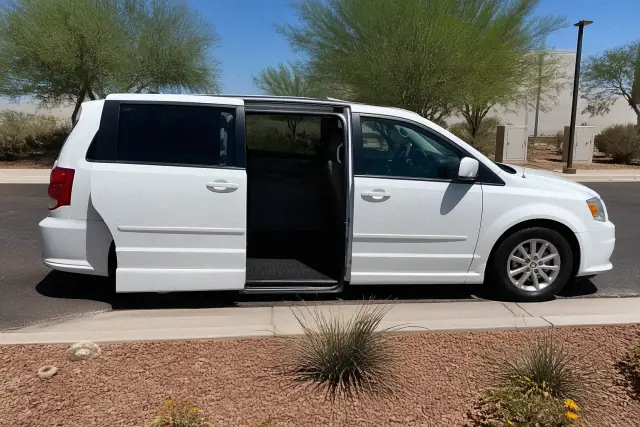
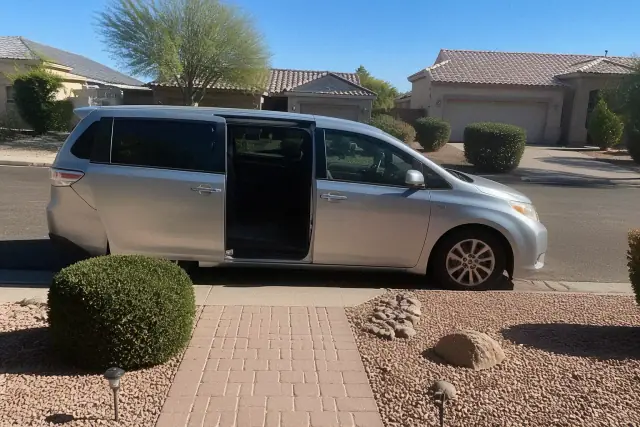
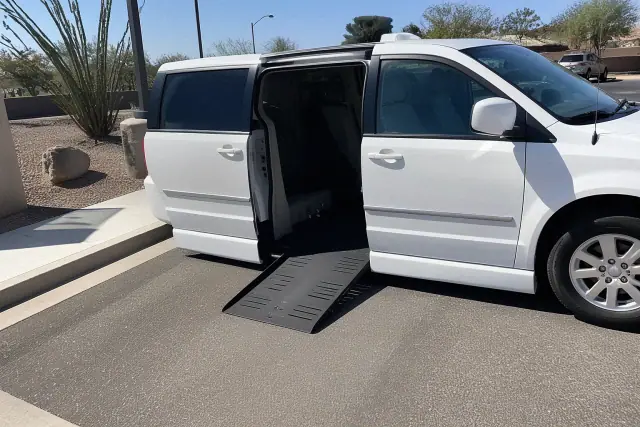
Medical transport van with side doors open for boarding parked at a curbside in Peoria, AZ.

Ambulatory rides serve passengers who can walk or use a walker but need dependable transportation tied to an appointment window. Dispatch records the passenger's mobility needs and coordinates the pickup and return plan around the scheduled visit.

Explore Service

Bariatric Transportation

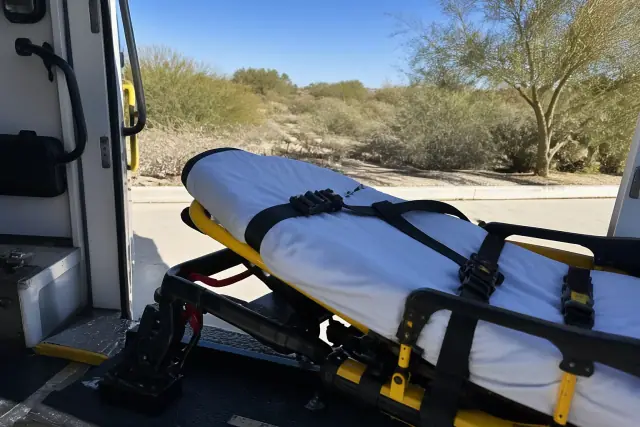
Bariatric medical transport stretcher with safety belts locked at the rear doors of a vehicle in Peoria, AZ.

Bariatric transportation uses reinforced ramps, wider securement systems, and higher weight-rated lift equipment designed for larger passengers. These rides are staffed for safe bariatric transfers to dialysis, medical appointments, hospital discharges, and other West Valley destinations.

Dialysis Transportation

Interior floor of a medical transport vehicle with secure wheelchair tie-down straps in Peoria, AZ.

Dialysis transportation can be arranged as a standing schedule around treatment days and clinic pickup windows. Because many patients travel three times a week, dispatch works with patients and centers near Peoria and Sun City to keep the weekly rotation consistent.

Medical Appointment Transportation

Medical transport vehicle with sliding doors open for boarding on a street in Peoria, AZ with desert landscaping.

Scheduled transportation supports routine visits, specialist consultations, and physical therapy along Bell Road, Thunderbird Road, and other Peoria medical corridors. Drivers can wait through short visits when requested or coordinate a return pickup for longer appointments.

Hospital Discharge Transportation

Medical transport stretcher being loaded into a vehicle on a driveway in Peoria, AZ.

Hospital discharge rides are coordinated around actual release readiness rather than a fixed appointment slot. Dispatch can work with discharge nurses and planners while matching the vehicle to a wheelchair, walker, stretcher, or other documented mobility need.

Senior Medical Transportation

Wheelchair tie-down straps and floor tracking system inside a medical transport van in Peoria, AZ.

Senior transportation includes assistance from the front door to the vehicle, help with mobility aids, and a pace suited to the passenger. Peoria-area seniors use the service for routine checkups, specialist visits, and other scheduled outings when driving is no longer practical.

Door-to-Door Medical Transportation

Medical transport van parked curbside with sliding doors open for boarding in Peoria, AZ.

Door-to-door service begins inside the home or facility lobby rather than at the curb. The driver assists with the wheelchair or walker, stays with the passenger through vehicle entry, and makes sure the passenger is safely inside at the end of the return trip.

Long Distance Medical Transportation

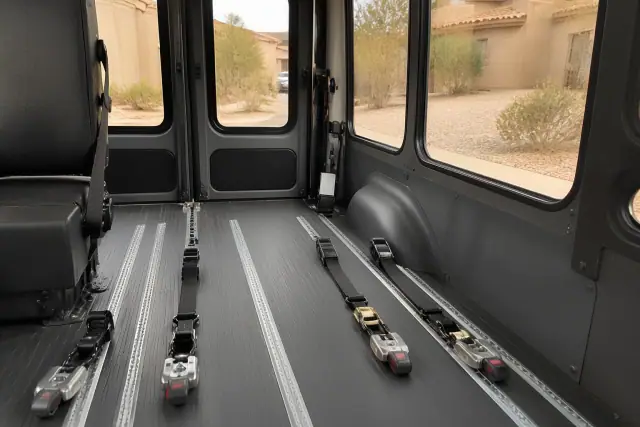
Interior view of a medical transport vehicle with secured equipment and desert scenery visible in Peoria, AZ.

Long-distance rides connect Peoria patients with specialty hospitals, appointments, admissions, and facility placements in central Phoenix, Scottsdale, Tucson, and beyond the immediate West Valley. Route planning accounts for traffic on Loop 101 and I-17 while preserving the wheelchair, stretcher, or bariatric setup required for the passenger.

Choosing a Ride

How to Choose the Right Medical Ride in Peoria

The right ride depends on how the passenger travels, the assistance needed at each doorway, and the timing and distance of the appointment. Share those details before booking so dispatch can match the vehicle, staffing, pickup window, and route, including trips through western Peoria near Loop 303.

Mobility and Positioning Needs

Explain whether the passenger walks, uses a manual or power wheelchair, travels by scooter, or must remain lying flat. Positioning needs determine whether an ambulatory, wheelchair, bariatric, or stretcher vehicle is appropriate.

Vehicle Access and Securement

Provide the wheelchair or scooter type, make, and approximate weight so dispatch can choose a ramp- or lift-equipped vehicle. The correct interior clearance and securement setup matter as much as getting the passenger through the door.

Door-to-Door Assistance

Clarify whether the passenger needs help from a residence, lobby, hospital room, or facility entrance. Door-to-door assistance is especially useful for riders living alone, using mobility aids, or returning home after a hospital stay.

Treatment Schedule Reliability

Appointments such as dialysis, chemotherapy, and physical therapy depend on a defined arrival time. A standing schedule can reduce repeated coordination for ongoing care and keep pickup details consistent from one visit to the next.

Wait, Return, and Discharge Timing

Tell dispatch whether a driver should wait through a short visit or return later. Hospital releases require a flexible plan because paperwork, clinical clearance, and the patient's actual discharge readiness can shift the pickup time.

Local or Long-Distance Coverage

Confirm the complete destination before scheduling, including cross-city clinics, specialty hospitals, and facility placements outside Peoria. Longer trips use confirmed pickup and arrival windows so appointments and admissions can be planned around the route.

Peoria Transportation Barriers

Common Barriers to Reliable Medical Transportation

Peoria grew from 154,065 residents in 2010 to 190,985 in the 2020 census, expanding transportation demand across a large and varied footprint. Nationally, non-emergency medical transportation is a multi-billion-dollar sector because missed rides can interrupt care; locally, distance, strict treatment times, accessibility needs, and extreme heat make the details of each trip important.

Plan My Ride

Long In-City Distances

Peoria is the sixth-largest city in Arizona by land area, so clinics and residences can be far apart even within city limits. The drive between a neighborhood and a medical facility can take 20 to 30 minutes before traffic, loading, and assisted transfers are considered.

Fixed or Shared-Ride Schedules

Valley Metro fixed routes and Peoria Transit's Dial-A-Ride can support many local trips, but fixed and shared-ride schedules may not match a precise treatment window. Newer areas in North Peoria also sit beyond the reach of some convenient fixed-route connections.

Mobility Equipment Mismatch

A general rideshare vehicle may not fit a power chair, scooter, stretcher, or bariatric securement system. Choosing the wrong vehicle can also leave the passenger without the lift, interior clearance, or trained transfer assistance needed at pickup.

Recurring Treatment Demands

Dialysis, cancer treatment, and rehabilitation can create a repeating transportation need that families cannot always cover around work and caregiving. A recurring ride plan reduces the need to rebuild the same pickup, mobility, and clinic details before every visit.

Extreme Summer Heat

Peoria regularly sees temperatures above 105 degrees in July and August. Precise pickup windows and door-to-door assistance help elderly and medically fragile passengers avoid waiting outside at the curb in dangerous heat.

Changing Discharge Times

Hospital release timing can change as paperwork, medication, and clinical clearance are completed. Transportation coordinated with the discharge team can adjust around actual readiness while keeping the correct wheelchair, stretcher, or bariatric vehicle in the plan.

Why Choose Us

Why Choose Phoenix Non Emergency Medical Transport in Peoria?

Medical rides require more than a pickup address and a destination. Our approach combines accessible vehicles, staff trained for passenger transfers, and local coordination with patients, caregivers, dialysis centers, discharge planners, and assisted living teams across the West Valley.

ADA-Accessible Vehicles

Fleet vehicles meet ADA accessibility requirements for lifts, interior clearance, and wheelchair securement points. Regular mechanical inspections check ramps, lifts, tie-down straps, and securement hardware, and commercial auto coverage exceeds Arizona's state minimums.

Driver Screening and Transfer Training

Drivers undergo background screening and training specific to non-emergency medical transport, including proper tie-down and patient-transfer procedures. Those practices align with the vehicle inspection, driver, and passenger transport requirements set by the Arizona Department of Health Services and Arizona Department of Transportation.

Local Dispatch Coordination

Dispatch plans daily routes across Arrowhead Ranch, Vistancia, the Peoria Sports Complex area, North Peoria, and neighboring West Valley communities. Coordination with facilities and direct communication about delays help keep appointments, discharges, and recurring treatment rides organized.

Simple Process

How Medical Transportation Works in Peoria

Patients, family caregivers, case managers, and discharge planners can arrange transportation through the same straightforward process. Each step identifies the trip timing, passenger needs, equipment, vehicle, and destination handoff before the ride begins.

01.

Share Trip Details

Provide the pickup and drop-off addresses, appointment or admission time, mobility equipment, and requested door-to-door assistance. Facility staff can schedule on the passenger's behalf when they have the necessary trip details.

02.

Match the Vehicle

Dispatch selects an ambulatory, wheelchair, bariatric, or stretcher vehicle based on the passenger's positioning and equipment. Specialized requests are scheduled around the availability of the required lift, securement system, gurney mount, and staff.

03.

Confirm the Pickup Window

The pickup window is set around the appointment, discharge, treatment, or admission time. Recurring trips can be placed on a standing weekly schedule, while short-notice requests depend on the right vehicle and driver being available.

04.

Complete an Assisted Pickup

The driver greets the passenger within the confirmed window and provides the planned assistance from the home or facility to the vehicle. The appropriate ramp, lift, or transfer method is used before the mobility device or stretcher is secured.

05.

Ride Securely and Stay Informed

The passenger remains secured with the correct wheelchair tie-downs or stretcher straps throughout the trip. If traffic or another delay affects timing, the driver or dispatch team communicates the change rather than leaving the family or facility guessing.

06.

Finish the Handoff or Return Plan

At the destination, the driver assists the passenger out of the vehicle and into the facility as arranged. For short visits, the driver may wait when requested; longer visits use a coordinated return pickup, and homebound riders are assisted safely inside.

Ride Planning Scenarios

Transportation Plans for Peoria Patients & Families

Case Study 1: Recurring Dialysis: A standing schedule aligns treatment days, pickup windows, mobility equipment, and return rides so the same trip details do not need to be rebuilt each week.

Case Study 2: Hospital Discharge: Dispatch coordinates with the discharge team, follows actual release readiness, and sends the wheelchair, bariatric, or stretcher vehicle documented for the passenger.

Case Study 3: Long-Distance Specialty Care: A confirmed route and arrival window support appointments, admissions, and facility placements in central Phoenix, Scottsdale, Tucson, or another destination beyond the West Valley.

Plan Your Medical Ride

Schedule Peoria
Medical
Transportation

Tell dispatch where the passenger is going, when they need to arrive, how they travel, and what assistance is required at pickup and drop-off. We will use those details to identify the appropriate ride type and provide a specific quote based on the route and mobility needs.

Peoria Transportation Help

FAQs About Medical Transportation in Peoria, AZ

These answers cover coverage, scheduling, equipment, public benefits, and the ride-planning details Peoria patients and caregivers ask about most often. Call dispatch for a trip-specific vehicle match, availability check, and quote.

Call Dispatch

Original Medicare generally does not cover routine non-emergency medical transportation. Some Medicare Advantage plans include a limited supplemental transportation benefit, but coverage varies by plan, so review the plan documents or call the insurer before scheduling.

Pricing depends on distance, vehicle type, mobility equipment, and the assistance required rather than a single flat hourly rate. Stretcher, bariatric, wait-and-return, and long-distance trips involve different equipment or staffing, so dispatch provides a route-specific quote. Nationally, a missed medical appointment can cost a healthcare system between $200 and $265 per missed slot, which is one reason dependable scheduling matters.

Peoria seniors often combine family help, Peoria Transit's Dial-A-Ride, and dedicated non-emergency medical transportation. A dedicated medical ride offers appointment-based timing, cross-city routing, mobility equipment, and transfer assistance for dialysis, hospital discharge, specialist visits, and other healthcare trips.

Valley Metro operates fixed bus routes along major corridors, while Peoria Transit's Dial-A-Ride On-Demand program uses ADA-accessible vehicles within its defined service area. Dial-A-Ride is booked in advance and uses a shared-ride model, so its pickup windows may be broader than a dedicated medical transport schedule.

Vehicles can accommodate manual wheelchairs, power wheelchairs, scooters, and bariatric wheelchairs using a ramp or lift matched to the equipment. Share the chair type, make, and approximate weight when booking so dispatch can assign the correct vehicle and securement setup.

Book at least 24 to 48 hours ahead for the best chance of securing a preferred pickup window, especially when bariatric or stretcher equipment is required. Recurring trips such as dialysis are best arranged as a standing schedule, while hospital discharges may need more flexible timing.

Same-day wheelchair and ambulatory requests are accommodated when the appropriate vehicle and driver are available. Bariatric and stretcher rides may require more lead time because they depend on specialized equipment and staffing, so calling early improves the available options.

Coverage includes North Peoria near Vistancia and Lake Pleasant, central Peoria around Peoria Avenue and the Peoria Sports Complex, South Peoria near the Agua Fria River, and western neighborhoods near Loop 303. Service also extends to Glendale, Surprise, Sun City, Sun City West, Youngtown, El Mirage, and northern Phoenix.

Arizona Medicaid through the Arizona Health Care Cost Containment System may cover non-emergency medical transportation for eligible members, depending on the eligibility category and trip. Coverage is different from Medicare, so verify the member's benefit before booking; dispatch can help identify the information needed for that check.

The wheelchair is positioned at designated securement points and stabilized with the vehicle's tie-down system before travel. Drivers are trained in securement procedures, and lift mechanisms, ramps, straps, and hardware receive routine inspection for wear.

Stretcher transportation is intended for a passenger who cannot sit upright because of post-surgical restrictions, spinal precautions, frailty, or another documented positioning need. It uses a secured gurney system, safety straps, and trained staff, and should be arranged in advance so the correct vehicle is available.

Bariatric transportation uses reinforced ramps, wider securement systems, and higher weight-rated lift equipment suited to larger passengers. The ride is matched with personnel trained in safe bariatric transfer technique for appointments, dialysis, and hospital discharges.

Yes. Dispatch can build a standing schedule around the patient's treatment days, clinic times, mobility equipment, pickup location, and return plan. Working from a recurring rotation reduces repeated booking and helps the clinic, passenger, and caregiver coordinate the same weekly details.

A patient, family member, case manager, or discharge planner shares the expected release timing, destination, mobility equipment, and assistance needs. Because discharge readiness can shift, dispatch coordinates around the actual release and sends the vehicle required for a wheelchair, walker, stretcher, or bariatric transfer.

The driver meets the passenger inside the home or facility lobby, assists with the wheelchair or walker, and stays through the transfer into the vehicle. At the destination and on the return trip, the driver provides the arranged assistance so the passenger is not left at the curb.