Proudly serving Phoenix, Mesa, Glendale, Scottsdale, Tempe, Chandler & surrounding areasCall or Text 24/7: 602-449-8153
Aerial view of Phoenix, AZ, showing desert foothills, saguaro cacti, and residential neighborhoods at sunset.

Bariatric Transportation in Phoenix, AZ: Climate-Controlled Medical Vans & Reinforced Mobility Equipment

Phoenix Non Emergency Medical Transport provides climate-controlled bariatric transportation throughout Phoenix and Maricopa County. From one dispatch desk, we coordinate bariatric, wheelchair, stretcher, ambulatory, dialysis, medical-appointment, hospital-discharge, senior, door-to-door, and long-distance transportation. Wide-door wheelchair vans, reinforced ramps, and bariatric-rated stretchers help match each stable patient to suitable non-emergency equipment. Patients, families, case managers, and care teams can arrange one-time or recurring rides with one call.

Phoenix summer temperatures can remain above 110 degrees for weeks, making a missed pickup especially difficult for a patient waiting outside a clinic. Our crews train in bariatric patient handling, proper body mechanics, pressure-point protection, and ADA-compliant loading procedures. As an AHCCCS-compliant NEMT provider, we work with Medicaid transportation referrals and coordinate scheduling with hospital discharge planners and dialysis centers. Upfront trip quotes and pre-pickup mobility assessments help families understand the plan before the vehicle arrives.

Tell dispatch the patient's weight, mobility level, appointment time, pickup address, destination, and equipment needs so the correct vehicle and crew can be assigned. Same-day requests and recurring rides scheduled weeks ahead are both supported, subject to trip details and scheduling.

Phoenix Non Emergency Medical Transport provides bariatric transportation from Phoenix throughout the surrounding metro area, including Mesa, Scottsdale, Tempe, Glendale, and Chandler.

★ ★ ★ ★ ★4.9/5 Average Rating · 20+ Years of Experience · Thousands of Customers Helped · Licensed & Insured · Patients, Families & Care Teams

Bariatric Transportation Services & Benefits

What Is Bariatric Transportation?

Bariatric transportation is non-emergency medical transport for plus-size patients whose weight, mobility, or positioning needs exceed standard equipment. Standard ambulatory setups are not designed for patients over 300 pounds, so a safe plan starts with weight-rated equipment and adequate interior clearance.

Before pickup, dispatch reviews the patient's weight, mobility level, ability to bear weight, and required medical equipment. That assessment determines whether the trip needs a bariatric wheelchair, a stretcher, a hydraulic lift, or a two-person transfer protocol.

Local bariatric trips typically range from $200 to $1,200 depending on distance, equipment, and staffing, with specialized equipment fees commonly adding $30 to $100 or more to the base fare. We provide the trip-specific quote before booking, and medically unstable or life-threatening situations should go to 911 instead.

Benefits of Proper Bariatric Transport

The right vehicle, equipment, staffing, and securement plan can make a medical ride safer and more dignified for the patient while reducing avoidable transfer strain for attendants.

  • Reinforced ramps, wide doors, and load-rated vehicle flooring
  • Bariatric wheelchairs rated to 700 pounds and stretchers rated up to 1,000 pounds
  • Hydraulic lifts that reduce the need for manual lifting
  • Crews trained in body mechanics, positioning, and pressure-point protection
  • Four-point wheelchair securement with a separate lap and shoulder belt
  • Climate-controlled travel for Phoenix conditions
  • Door-to-door assistance rather than curb-only pickup
  • Clear trip quotes and coordination with care teams before pickup
Patient Transport Options

Specialized Patient Transport Services

Choose transportation around the patient's mobility, positioning needs, destination, and treatment schedule. The same dispatch team can coordinate local appointments, recurring care, discharges, senior rides, and longer-distance transfers.

Bariatric Wheelchair Transportation

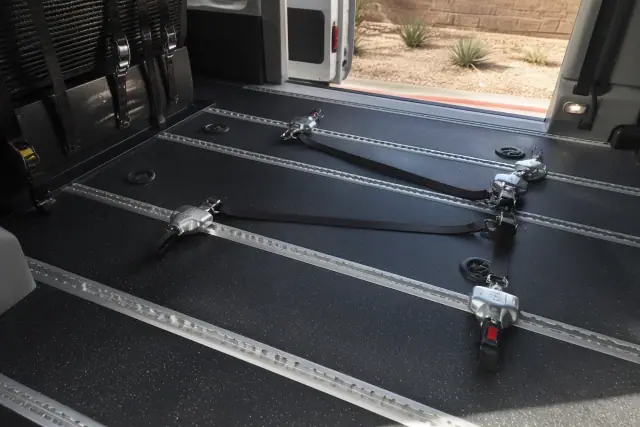
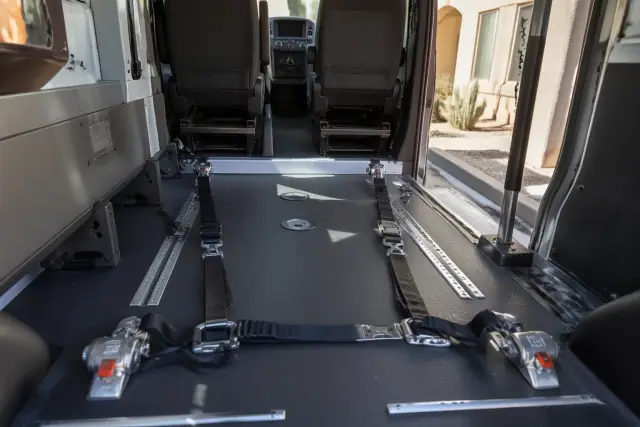
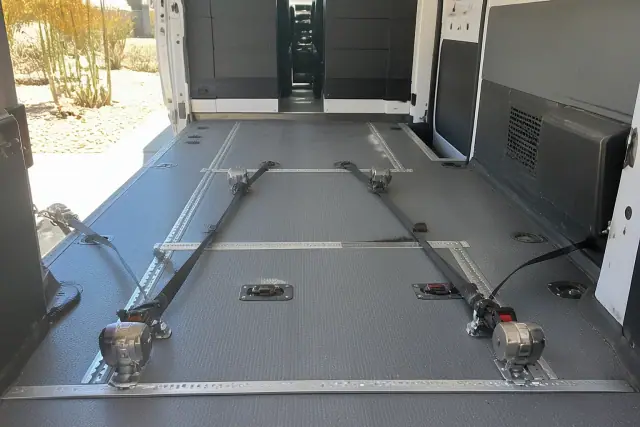
Heavy-duty wheelchair tie-down straps and floor tracking systems inside a bariatric transport van in Phoenix, AZ.

Wide-door vans use hydraulic or ramp-based lifts and four-point wheelchair anchor systems so patients can remain in their own chair when appropriate. Bariatric wheelchairs in the fleet are rated to 700 pounds, and WC19 securement includes a separate lap and shoulder belt for the rider. Wheelchair van service typically runs $65 to $100 or more depending on distance and time of day.

Request Estimate

Bariatric Stretcher Transportation

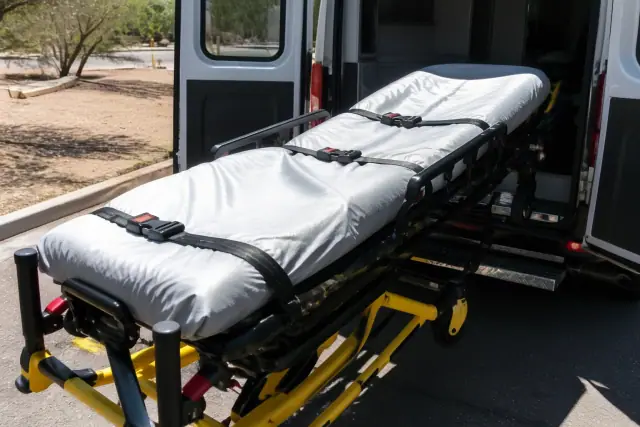
Bariatric stretcher with safety belts and locking mechanism being loaded into a vehicle in Phoenix, AZ.

Bariatric stretchers rated up to 1,000 pounds support patients who must remain recumbent or cannot sit upright. Adjustable head and foot positioning, side rails, multi-point harnesses, IV pole mounts, oxygen tank brackets, and additional suspension damping help crews manage hospital discharges, facility transfers, and post-operative rides.

Request Estimate

Medical Appointments & Hospital Discharges

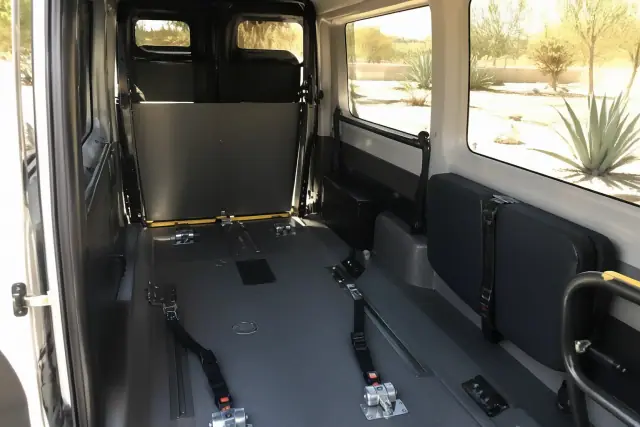
Wheelchair securement station with floor tracking and tie-down straps in a bariatric transport vehicle in Phoenix, AZ.

Door-to-door appointment service includes pickup planning, assistance from the residence to the vehicle, and help entering the destination facility. For discharges, dispatch confirms the changing release time, mobility needs, and destination, whether the patient is going home, to a skilled nursing facility, or to rehabilitation. Pharmacy or lab stops can be coordinated when arranged in advance.

Request Estimate

Dialysis & Recurring Treatment Rides

Heavy-duty tie-down straps secured on a medical transport vehicle floor in Phoenix, AZ, seen through a window.

Dialysis patients may need three round trips a week, every week, so recurring rides are placed on a standing schedule with known pickup windows. Consistent drivers are assigned where possible, helping patients and clinics coordinate regular treatment without rebuilding the ride plan each time.

Request Estimate

Senior & Ambulatory Transportation

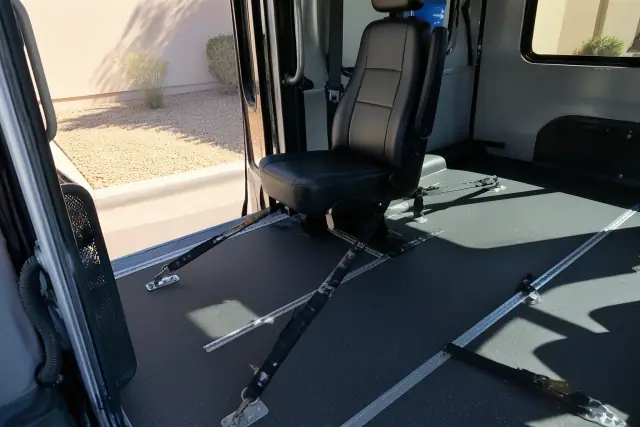
Wheelchair securement station with four-point tie-down straps in a transport vehicle in Phoenix, AZ.

Low-step entry, grab handles, non-slip flooring, gait-belt support, and patient-paced transfers help older adults travel more comfortably. Service supports ambulatory and mobility-assisted riders in Phoenix, Sun City, Sun Lakes, and central Phoenix senior communities, with family-caregiver coordination when needed.

Request Estimate

Long-Distance Medical Transportation

A technician inspecting wheelchair securement anchors in a medical transport vehicle in Phoenix, AZ.

Long-distance medical transportation can cover specialist visits in Tucson, facility transfers to Flagstaff, and interstate treatment trips. National pricing data places these trips in the $125 to $1,200-plus range depending on mileage, vehicle type, and staffing, while each actual ride is quoted individually. Extra lead time allows route, rest-stop, equipment, and monitoring needs to be confirmed.

Request Estimate
Equipment and Assistance

Bariatric Equipment & Patient Support

A suitable bariatric ride combines vehicle access, patient positioning, securement, trained assistance, and realistic scheduling. These support options are selected from the information provided before pickup.

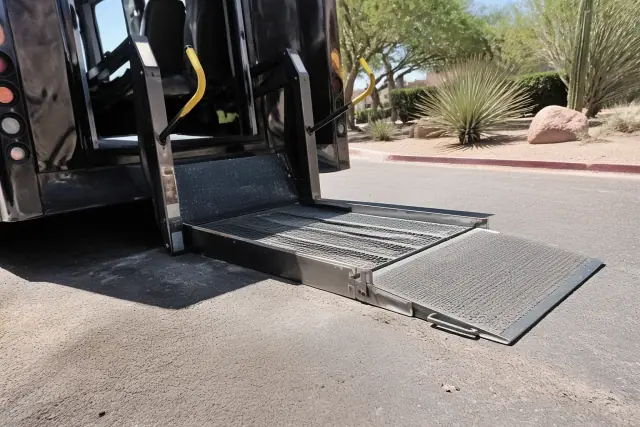
Heavy-duty hydraulic wheelchair ramp deployed on a concrete surface in Phoenix, AZ.

Reinforced Wheelchair Access

Wide-door wheelchair vans pair interior clearance and load-rated flooring with lift or ramp access built for larger mobility devices.

  • Hydraulic and ramp-based lift options
  • Wide doorways and bariatric interior clearance
  • Wheelchairs selected for the patient's documented weight
  • Four tie-down anchor points for the mobility device
  • In-chair loading when transfer is not required
Request Estimate
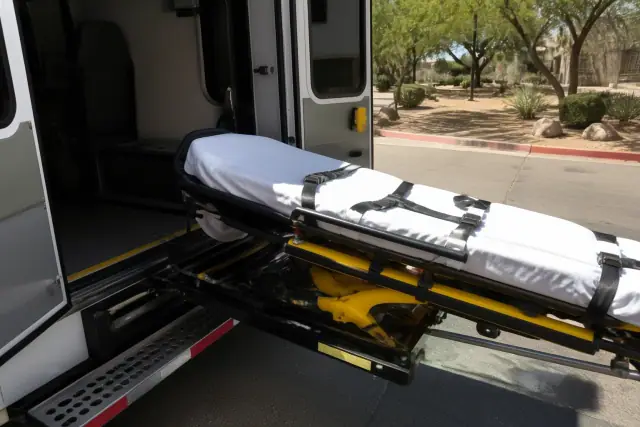
Bariatric stretcher secured at the rear of an ambulance during a loading procedure in Phoenix, AZ.

Bariatric Stretcher Configuration

Bariatric cots support loads up to 1,000 pounds, while standard NEMT stretchers commonly cap around 300 to 500 pounds. The correct cot and vehicle configuration are confirmed before dispatch.

  • Adjustable head and foot positioning
  • Multi-point harnesses and protective side rails
  • Built-in IV pole mounts
  • Wall-mounted oxygen tank brackets
  • Additional suspension damping for a smoother ride
Request Estimate
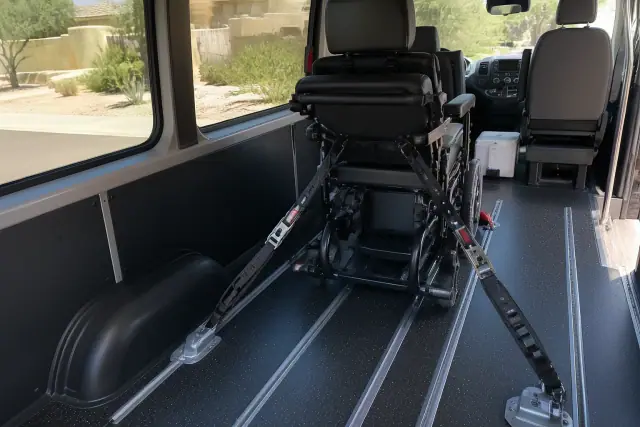
Bariatric patient transport equipment secured with heavy-duty tie-down straps in a vehicle in Phoenix, AZ.

Securement and Patient Positioning

Crews secure the mobility device separately from the patient and check positioning before the vehicle moves.

  • WC19-aligned wheelchair securement procedures
  • Separate lap and shoulder belt for the rider
  • Restraint-tension check before every departure
  • Pressure-point protection during longer trips
  • Position adjustments kept within physician orders
Request Estimate
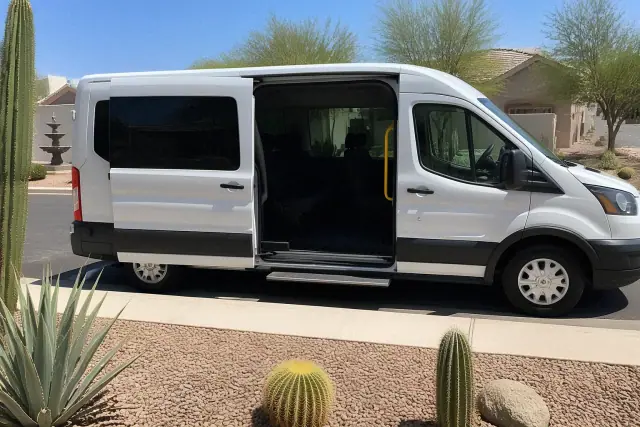
Professional transport van with open doors parked at a residential curb in Phoenix, AZ.

Door-to-Door Coordination

Door-to-door service connects the home, vehicle, and medical destination instead of leaving a mobility-limited patient at the curb.

  • Pickup address, appointment time, and destination collected at booking
  • Day-before confirmation for scheduled rides
  • Call or text when the driver is en route
  • Assistance into the destination facility
  • Coordination with family, case managers, and clinical teams
Request Estimate
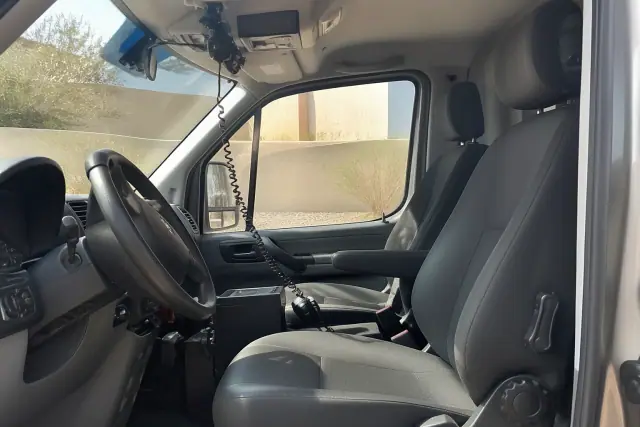
Interior view of a bariatric transport vehicle cabin showing radio equipment in Phoenix, AZ.

Flexible Trip Scheduling

Scheduling can cover one-time medical rides, recurring treatment routes, same-day requests, and longer trips planned well in advance.

  • Same-day requests reviewed with the required equipment details
  • Recurring rides reserved weeks ahead when needed
  • Morning, evening, and weekend options for longer trips
  • Travel buffers for I-10 and Loop 202 traffic patterns
  • Advance planning for pharmacy, lab, or other approved stops
Request Estimate
Finding the Right Fit

Choosing the Right Bariatric Transport Approach

The appropriate transport plan depends on the patient's actual weight, mobility, ability to bear weight, required position, medical equipment, distance, and destination. Sharing those details before pickup lets dispatch select a wide-door wheelchair van or stretcher vehicle, determine whether a two-person lift protocol is needed, and quote the trip according to distance, equipment, and staffing.

Weight-Rated Bariatric Equipment

Reinforced ramps, wider cabins, load-rated flooring, hydraulic lifts, bariatric wheelchairs, and power-load stretcher systems are matched to the patient's documented needs before the crew is dispatched.

Bariatric-Handling Training

Drivers and attendants receive hands-on training in lifting technique, body mechanics, patient positioning, pressure-point protection, skin integrity, and ADA-compliant loading for non-emergency transport.

Phoenix Trip Coordination

Dispatch builds pickup buffers around Phoenix traffic, tracks preferred routes and clinic drop-off points for regular riders, and coordinates changing discharge times with facilities and families.

What Sets Our Service Apart

Why Choose Us for Bariatric Transportation?

Phoenix Non Emergency Medical Transport combines bariatric-specific equipment, trained handling, door-to-door assistance, and one dispatch desk for local and long-distance rides. We coordinate with hospital discharge planners, dialysis centers, AHCCCS referrals, Medicaid transportation referrals, patients, and families, then provide a clear quote before booking.

Request a Transport Quote

Standard Equipment Capacity Gaps

Standard stretchers commonly support about 300 to 500 pounds and sedan-based transport may lack the doorway width, flooring, or ramp capacity a larger patient needs. Assigning equipment without checking actual weight can create avoidable loading and transfer risks.

Unsafe Manual Transfers

Trying to move a patient without hydraulic assistance or enough trained staff can increase the risk of falls, skin tears, and staff injury. Patients who cannot bear weight are assessed for a two-person lift protocol and correctly rated equipment before pickup.

Missed Recurring Treatments

A dialysis schedule may require three round trips every week, and a missed session can have serious health consequences. Standing schedules and known pickup windows help the patient and clinic plan recurring transportation consistently.

Phoenix Heat and Pickup Delays

When summer heat exceeds 110 degrees, waiting outside a residence or clinic for a delayed ride can become dangerous. Climate-controlled vehicles, scheduling buffers, and en-route calls or texts reduce unnecessary outdoor waiting.

Inadequate Wheelchair Securement

A wheelchair must be secured independently from its occupant. Drivers use a four-point tie-down system for the chair, a separate lap and shoulder belt for the patient, and a restraint-tension check before leaving the curb.

Wrong Level of Medical Transport

Non-emergency transportation is intended for medically stable patients traveling to scheduled care, dialysis, or a discharge destination. Acute or life-threatening symptoms require 911 because this service is not equipped for emergency response.

How It Works

Our Bariatric Transportation Process

Each trip is planned before pickup so the vehicle, equipment, crew, route, and timing fit the patient's mobility needs and medical destination.

01.

Share Trip and Mobility Details

Provide the pickup address, destination, appointment time, patient weight, mobility level, ability to bear weight, required position, and any equipment that must travel with the patient.

02.

Match the Vehicle and Equipment

Dispatch selects a wide-door wheelchair van or bariatric stretcher vehicle, confirms the equipment capacity, and determines whether hydraulic loading or a two-person transfer protocol is required.

03.

Confirm Timing and Price

The trip is quoted according to distance, vehicle, equipment, staffing, and timing. Scheduled rides are confirmed ahead of pickup, including a day-before check when applicable.

04.

Receive Door-to-Door Pickup

The driver calls or texts while en route, then the attendant assists the patient from the residence to the vehicle at a safe, unhurried pace.

05.

Secure and Complete the Ride

The crew checks wheelchair or stretcher securement, positions the patient for comfort within physician orders, and follows a planned route with appropriate Phoenix traffic buffer time.

06.

Coordinate Drop-Off or Return

Attendants help the patient into the destination, coordinate any approved pharmacy or lab stop, and follow the arranged return or recurring-ride schedule.

Plan Your Ride

Schedule Bariatric
Transportation
Today

Call with the patient's mobility, equipment, pickup, destination, and timing details to receive a trip-specific plan and clear quote before booking.

Bariatric Transport Help

Bariatric Transportation FAQs

These answers cover equipment, costs, coverage, scheduling, and the information needed to plan bariatric medical transportation in Phoenix.

Call About a Ride

Safe transport starts with the patient's weight, mobility, ability to bear weight, required position, and equipment needs. Dispatch then matches those details to reinforced ramps, a properly rated wheelchair or stretcher, and the appropriate crew. Patients who cannot bear weight may require a two-person lift protocol, followed by four-point securement before travel.

Bariatric transport typically ranges from $200 to $1,200 per trip depending on distance, equipment, and staffing. Specialized equipment fees often add $30 to $100 or more to the base fare. Phoenix Non Emergency Medical Transport provides a trip-specific quote before booking.

Standard Uber rides are not free medical transportation, and regular rideshare vehicles do not include bariatric wheelchairs, stretchers, securement systems, or trained attendants. Uber Health is a separate program that some health plans and providers use within defined benefits, but it is not free to the general public. A dedicated NEMT provider is the suitable option when a patient needs physical assistance or specialized equipment.

Most non-emergency medical transportation is priced per trip rather than strictly per hour. In Arizona, ambulatory sedan transport typically runs $35 to $60 per weekday trip, while wheelchair van service commonly runs $65 to $100 or more. Off-hours, weekend, and holiday wheelchair trips may have base fees of $75 to $90, with bariatric and stretcher trips priced higher for equipment and staffing.

Original Medicare covers non-emergency transportation only in limited circumstances and generally requires a doctor's written order that the ride is medically necessary. Some Medicare Advantage plans include transportation benefits that Original Medicare does not. AHCCCS covers NEMT more broadly for eligible Arizona Medicaid members, so patients should check their specific plan and documentation requirements.

Bariatric cots in the fleet typically support up to 1,000 pounds, compared with standard NEMT stretchers that commonly cap around 300 to 500 pounds. Bariatric wheelchairs are rated to 700 pounds. Exact capacity depends on the assigned cot and vehicle configuration, so patient weight is confirmed before equipment is selected.

Seniors often benefit from door-to-door service that includes assistance between the residence, vehicle, and medical facility. Wheelchair-accessible vans fit patients using mobility devices, while ambulatory transport fits those who can walk but need dependable appointment transportation. Grab handles, low-step entry, non-slip flooring, gait-belt support, and recurring scheduling can address common mobility and coordination needs.

Service covers Phoenix and the surrounding metro area, including Mesa, Scottsdale, Tempe, Glendale, Chandler, and Sun City. Phoenix spans 517.9 square miles, is the fifth-most populous U.S. city, and anchors a metro area of roughly 5.19 million residents, so routes are planned around a large service footprint. Long-distance trips may also reach Tucson, Flagstaff, other Arizona cities, and interstate treatment destinations when arranged in advance.

Provide the pickup address, destination, appointment time, patient weight, mobility level, ability to bear weight, positioning needs, and required medical equipment. These details let dispatch assign the correct vehicle, equipment, staffing, route, and quote before pickup.

Yes. Recurring dialysis rides can be placed on a standing schedule with pickup windows shared with the patient and clinic, and consistent drivers are assigned where possible.

Door-to-door service includes assistance from the residence to the vehicle and from the vehicle into the destination facility. It is more supportive than curb-to-curb transportation for patients who need mobility help.

A pharmacy stop after discharge or a lab stop before an appointment can be coordinated when scheduled in advance. Dispatch plans the route, expected wait, and billing before the trip.

Use non-emergency transportation only when the patient is medically stable and traveling for scheduled care, dialysis, or discharge. Call 911 for acute or life-threatening symptoms because NEMT vehicles are not equipped for emergency response.