Routine Discharge
For a routine discharge, rideshare can be an option when you can walk independently, remain alert, and received no sedation.
Phoenix Non Emergency Medical Transport picks up patients every day from hospitals across the Salt River Valley when a routine rideshare does not meet discharge requirements. A rideshare may work when you are alert, ambulatory, and were not sedated, but anesthesia, conscious sedation, or opioid-based pain control can mean you need a responsible adult or an approved non-emergency medical ride.
For a routine discharge, rideshare can be an option when you can walk independently, remain alert, and received no sedation.
After anesthesia, conscious sedation, or opioid-based pain control, the facility may require someone medically responsible for the ride home.
An equipped non-emergency medical ride can support wheelchair, stretcher, or bariatric transportation when a standard vehicle is not appropriate.
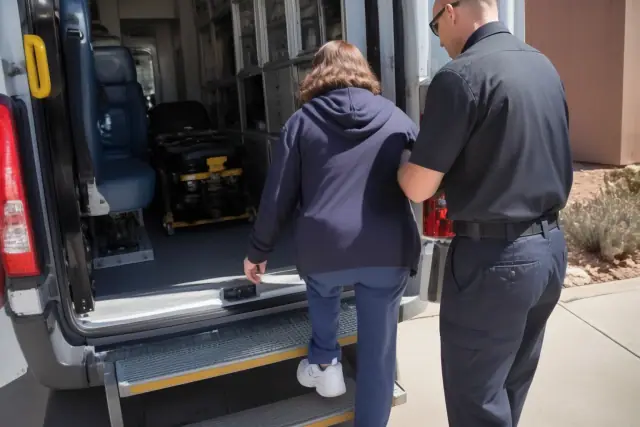
An alert, ambulatory patient meeting a standard rideshare at a routine hospital discharge. This is the situation in which rideshare may be permitted.
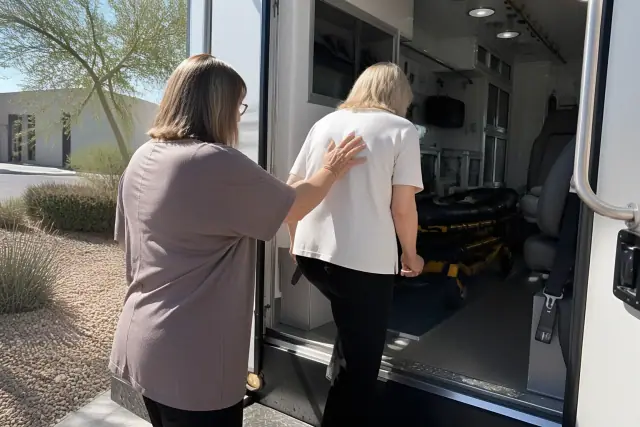
A responsible adult receiving discharge instructions after a sedated procedure. The pickup person must be more than an unknown driver.
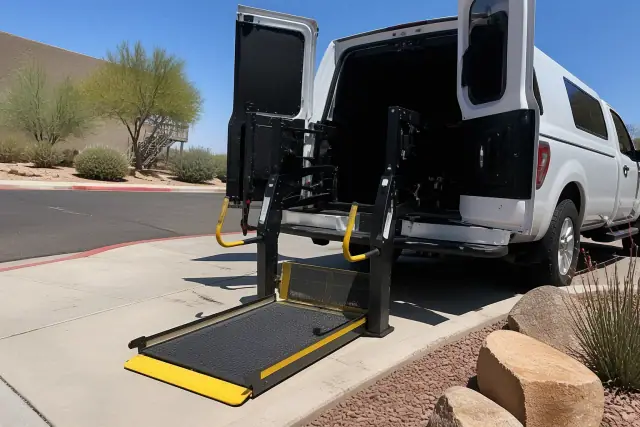
A wheelchair-equipped medical vehicle positioned for a safe hospital pickup. Mobility equipment changes which transportation option fits the discharge.
You are alert, ambulatory, leaving after a routine visit, and were not sedated.
You received anesthesia, conscious sedation, IV pain medication, or opioid-based pain control.
Colonoscopy and endoscopy consent forms almost universally require a responsible adult pickup.
Wheelchair, stretcher, and bariatric needs call for transportation equipped for that level of support.
| Discharge situation | Will a standard rideshare work? | What to arrange |
|---|---|---|
| Routine visit; alert, ambulatory, and not sedated | Often, if the facility agrees | Confirm the discharge instructions before booking |
| Anesthesia, conscious sedation, or opioid-based pain control | Commonly no | A responsible adult or licensed non-emergency medical transport |
| Colonoscopy or endoscopy | Consent forms almost universally require another option | A responsible adult pickup or an accepted medical ride |
| Wheelchair, stretcher, or bariatric support needed | Not with a standard vehicle | Properly equipped non-emergency medical transport |
Phoenix residents without a car may be able to use rideshare after a routine visit or ER discharge when they are alert, ambulatory, and were not sedated. Confirm the facility's release instructions before arranging the pickup.
Hospitals commonly decline rideshare discharge after anesthesia, conscious sedation, opioid-based pain control, or IV pain medication because a standard driver is not trained to respond if a patient becomes unresponsive. They may also refuse when the patient needs a wheelchair to leave the building. Colonoscopy and endoscopy centers almost universally require a responsible adult under their procedural consent forms.
What if you need a wheelchair or more support? Wheelchair-, stretcher-, and bariatric-equipped rides are available same-day in Phoenix, Tempe, Mesa, and Scottsdale. What if no friend or family member can drive you? Licensed non-emergency medical transport is an accepted substitute that hospitals and surgery centers can approve. Can coverage help? Qualifying AHCCCS members and many Medicare Advantage members may have NEMT coverage, so confirm benefits with the plan.
Share your discharge location, timing, and mobility needs to ask about an appropriate ride. The transport team can discuss whether a wheelchair-, stretcher-, or bariatric-equipped option matches those needs.