Hourly Cost Ranges
Ambulatory rides often fall between $25 and $100 per hour, wheelchair service between $45 and $150, and stretcher or bariatric transport between $75 and $250 or more.
Phoenix Non Emergency Medical Transport explains that medical transport may run from $25 to $100 per hour for ambulatory rides, $45 to $150 for wheelchair transport, and $75 to $250 or more for stretcher or bariatric trips. Most Phoenix-area local rides are quoted as flat, door-to-door fares, so the total depends on distance, mobility assistance, equipment, and timing rather than an hourly rate alone.
Ambulatory rides often fall between $25 and $100 per hour, wheelchair service between $45 and $150, and stretcher or bariatric transport between $75 and $250 or more.
Distance, rider mobility, lift or gurney needs, crew size, equipment, time of day, and appointment wait time all affect the final quote.
A flat base-plus-mileage fare usually fits a short local ride, while hourly billing may make more sense for standby service, long waits, or multi-stop trips.
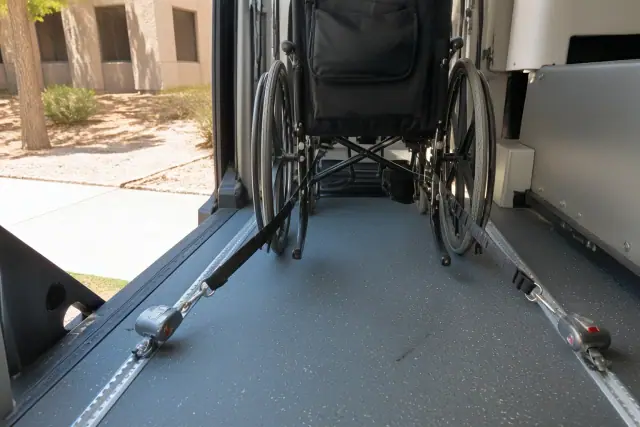
A lift-equipped vehicle and four-point wheelchair restraints help explain why wheelchair transport costs more than an ambulatory ride.
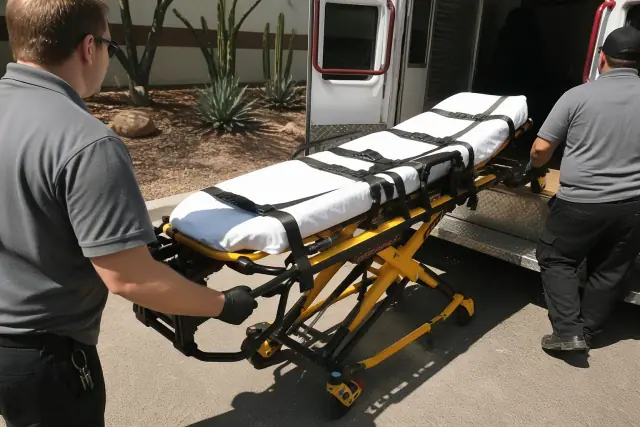
Stretcher service may require a gurney-equipped vehicle, a two-person crew, and accommodation for oxygen equipment or an IV stand.
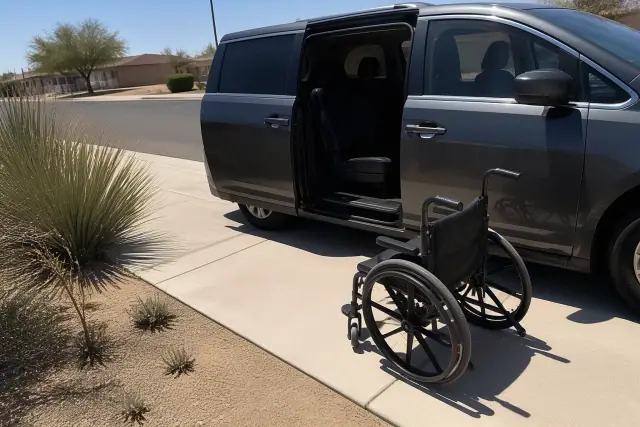
Door-to-door assistance typically adds $10-$20 compared with curb-to-curb pickup because the crew helps the rider between the home, vehicle, and facility.
Confirm whether the rider is ambulatory or needs wheelchair, stretcher, or bariatric support, then provide the complete pickup and destination addresses.
After a 15-30 minute grace period, wait-time charges commonly run $15-$25 for each additional 15-30 minute increment.
Ask which miles the base fare covers and whether load fees of $25-$50, wait time, return service, oxygen accommodation, or IV-pole use cost extra.
Private insurance and Medicare Part B may cover medically necessary transport in limited cases, while AHCCCS may cover approved rides for qualifying Arizona members.
| Service level | Typical base or trip range | Typical per-mile rate | What the rate reflects |
|---|---|---|---|
| Ambulatory | $25-$50 | $2-$3 | Minimal assistance and no mobility equipment |
| Wheelchair | $45-$100 | $2.50-$3.50 | Lift-equipped vehicle and wheelchair securement |
| Stretcher | $100-$225 | $3-$5 | Gurney and a two-person crew |
| Bariatric | $150-$300+ | $4-$6 | Reinforced equipment and additional crew support |
Phoenix covers 517.9 square miles within a metro of 5.19 million residents, so trip length can vary substantially between homes, clinics, and hospitals. Many local fares start with vehicle dispatch and the first several miles, then add mileage rather than billing every ride strictly by the hour. A downtown clinic-to-specialist trip can therefore cost far less than a cross-Valley ride, even when the riders need the same assistance level.
The assistance level sets the starting tier: an ambulatory rider generally needs less equipment than someone traveling by wheelchair, stretcher, or bariatric setup. A two-person crew, gurney, reinforced ramp, wider equipment, oxygen accommodation, or IV stand can increase the total. Regional long-distance runs may range from $125 to $1,200 or more per trip, while statewide or interstate transfers with an overnight crew, fuel stops, and medical monitoring equipment may range from $5,000 to $20,000.
Is per-trip or hourly billing better? A flat trip rate generally suits short rides, while hourly or standby pricing may fit multi-stop trips or lengthy appointments. Recurring dialysis rides may instead be bundled at $30-$60 per one-way trip for a schedule of three round trips a week. Medicare coverage is limited and requires medical-necessity documentation, and a hospital discharge planner can help arrange a properly equipped ride home when no personal driver is available.
Share the pickup and destination, rider mobility, needed equipment, appointment timing, and whether a return ride or wait is required. Those details support a clear door-to-door quote before the trip.