Proudly serving Phoenix, Mesa, Glendale, Scottsdale, Tempe, Chandler & surrounding areasCall or Text 24/7: 602-449-8153
Guides

What are your options for non-emergency medical transportation in Arizona?

Phoenix Non Emergency Medical Transport helps Valley residents reach scheduled medical care by ambulatory sedan, wheelchair van, stretcher vehicle, or bariatric transport when an ambulance is not needed. Arizona riders may arrange these trips through AHCCCS when eligible, a transportation benefit in some Medicare Advantage plans, or direct private-pay booking. The right route depends on coverage, mobility needs, assistance level, appointment type, distance, and timing.

Quick Summary

  • Eligible AHCCCS members can arrange medically necessary non-emergency ground or air transportation through registered providers and contracted brokers.
  • Private-pay riders can book ambulatory, wheelchair, stretcher, bariatric, door-to-door, or long-distance transportation directly.
  • Original Medicare generally does not cover routine non-emergency rides, but some Medicare Advantage plans include a transportation benefit.
  • Choose the booking route and vehicle by coverage, mobility equipment, required assistance, trip distance, and appointment schedule.

Three Ways to Arrange a Ride

Use an AHCCCS Transportation Benefit

Most enrolled members can use AHCCCS for medically necessary rides when they have no other reasonable way to reach a covered appointment. Trips are typically arranged through the member's health plan or its contracted transportation broker.

Book a Private-Pay NEMT Provider

Private-pay booking has no formal coverage eligibility requirement. A dedicated provider can match the trip with an ambulatory sedan, accessible wheelchair van, stretcher vehicle, bariatric vehicle, or longer-distance route.

Check a Medicare Advantage Plan

Some Medicare Advantage plans include transportation as a supplemental benefit even though Original Medicare generally excludes routine rides to medical offices. Review the plan documents or call the insurer before booking to confirm destinations, trip limits, and scheduling rules.

What to Look for in NEMT Options

Wheelchair Lift and Four-Point Securement

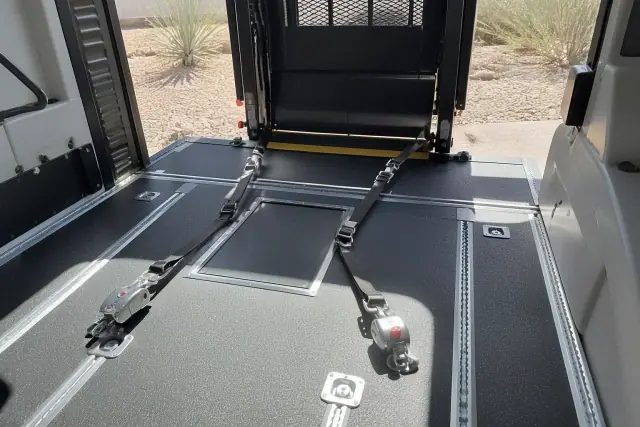
Wheelchair lift and four-point tie-down straps installed in a vehicle in Phoenix, AZ, with desert landscape visible.

A wheelchair van's hydraulic lift and four-point tie-down system securing a mobility chair. These features distinguish accessible NEMT from a standard curbside ride.

Door-to-Door Help in Phoenix Summer Heat

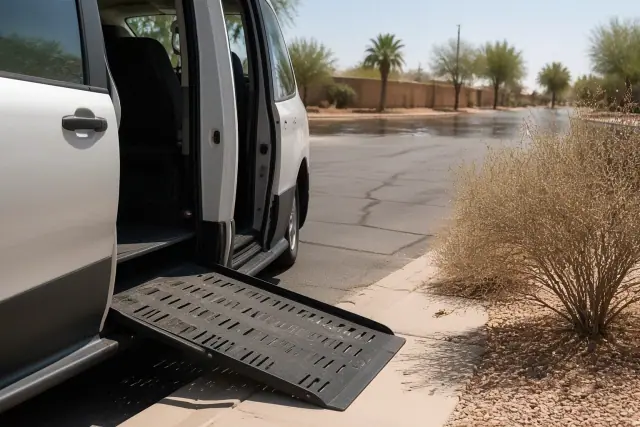
Transport van with an open mobility ramp parked on a sun-baked curb in Phoenix, AZ during a hot summer day.

A driver assisting an older rider between an entrance and an accessible vehicle. Phoenix pavement temperatures regularly exceed 150 degrees, making hands-on help important for frail or mobility-limited patients.

Ambulatory, Wheelchair, and Stretcher Vehicles

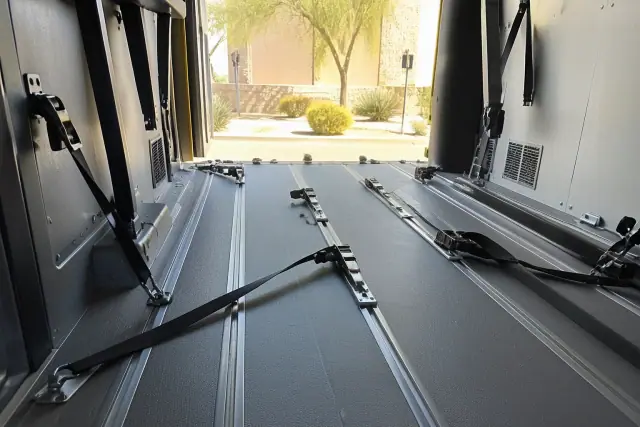
Interior of a medical transport vehicle with floor tracking systems and wheelchair tie-down straps in Phoenix, AZ.

The three vehicle setups side by side so readers can compare an ambulatory sedan, wheelchair-accessible van, and stretcher vehicle. The rider's ability to walk, transfer, sit upright, or remain lying down determines the appropriate option.

Arizona NEMT Option Snapshot

Coverage Route

AHCCCS may cover medically necessary ground and air transportation for eligible members. Original Medicare generally does not cover routine NEMT, while some Medicare Advantage plans offer a supplemental ride benefit.

Private-Pay Cost Ranges

Arizona rates generally run $35-$60 for ambulatory sedan transport, $65-$115 for wheelchair transport, and $150-$525 for stretcher or long-distance trips, depending on mileage and equipment needs.

Mobility and Assistance

Confirm whether the rider can walk or transfer, uses a wheelchair, must remain lying down, needs higher-capacity bariatric equipment, or requires door-to-door assistance. The answer controls the vehicle, securement, and staffing setup.

Distance and Booking Channel

Technology-based NEMT bookings report costs of $101-$250 for many Phoenix trips but may not include hands-on mobility help or stretcher capability. Long-distance rides to Tucson or out-of-state facilities require route planning and scheduled rest stops.

Choose an Arizona NEMT Route

Which Arizona NEMT Route Fits?

Access routeWhen it fitsWhat to confirm
AHCCCS transportationAn enrolled member has a medically necessary covered appointment and no other reasonable ride.Eligibility, authorization, and the contracted booking channel.
Private-pay NEMTThe rider wants to book directly without coverage eligibility requirements.Ambulatory, wheelchair, stretcher, bariatric, or door-to-door assistance needs.
Medicare Advantage benefitThe member's specific plan includes supplemental transportation.Trip limits, covered destinations, and advance-booking rules.
Technology-based bookingThe patient is stable and the service can meet the required assistance level.Hands-on help, accessible equipment, and total trip cost.
Long-distance medical transportCare requires travel beyond the Phoenix metro area.Vehicle type, rest stops, route plan, and facility timing.

How Arizona Riders Access NEMT

NEMT bridges the gap between an ambulance and ordinary transportation for stable patients who cannot safely drive or use standard transit. That role matters across the Phoenix metro area's 517.9 square miles, where dialysis, cancer treatment, specialist appointments, diagnostic imaging, rehabilitation, and hospital discharge may require scheduled help. AHCCCS members generally begin with their health plan or contracted broker; the AHCCCS Transportation Services numbers in the source are 602-417-4000 and 800-654-8713. Riders using private pay can contact a provider directly with the appointment time, pickup address, destination, mobility needs, and assistance requirements.

Factors That Determine the Right Ride

Start with the rider's mobility: ambulatory service fits someone who can walk or transfer with minimal help, a wheelchair van adds a ramp or hydraulic lift and securement, and stretcher transport keeps a stable patient lying down. Then consider hands-on assistance, since door-to-door help, gait-belt support, a companion at the appointment, or a wider ramp for bariatric equipment is different from curbside pickup. Appointment type also matters: recurring dialysis and cancer treatments favor consistent scheduling, while hospital discharge may require less notice and help with new mobility equipment. Finally, compare distance, total cost, wait time, additional stops, and whether the provider can coordinate with a facility or case manager.

Common Follow-Up Questions

Original Medicare generally does not pay for routine scheduled NEMT, although some Medicare Advantage plans include transportation. AHCCCS generally requires active enrollment, a documented medical need, and no other reasonable way to reach a covered appointment; private-pay riders have no formal eligibility requirement. Dialysis transportation may be organized around three round trips a week, and research reported by the Medicaid and CHIP Payment and Access Commission cites a study estimating roughly $3,423 per month per patient in savings for people managing kidney disease through consistent renal transportation. Standard appointments are best booked 24-48 hours ahead, while same-day and hospital-discharge requests depend on vehicle availability.
Plan Your Transportation

Need Help Choosing a Ride?

Share the appointment time, pickup address, destination, mobility equipment, and required assistance. Those details help match the request with an ambulatory sedan, wheelchair van, stretcher vehicle, bariatric option, or long-distance route.